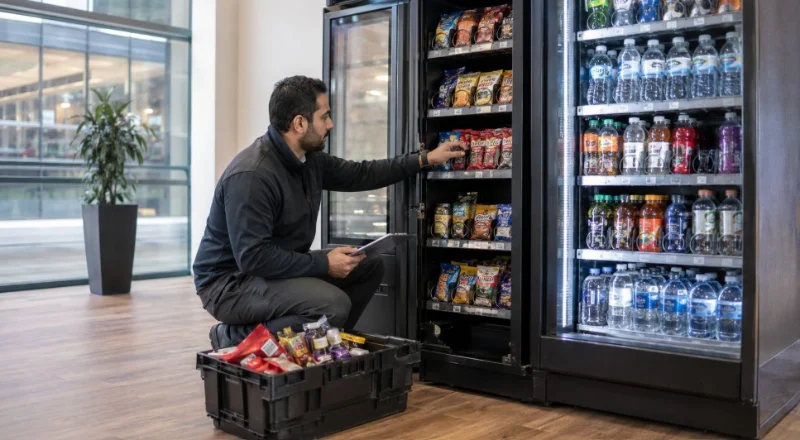
How to Start a Vending Machine Business in the UK?

A vending machine business in the UK can be started with one machine and expanded gradually into a network of profitable locations. The model is relatively straightforward, but it should not be treated as completely passive income.
The most important decision is not which vending machine to buy. It is where the machine will operate.
A reliable machine placed in a poor location can struggle to cover its costs, while a relatively simple machine in a workplace, warehouse, gym or other location with consistent demand can generate repeat sales every day.
For most beginners, the better order is:
Find Demand → Validate Location → Agree Terms → Choose Machine → Select Products → Launch → Measure Performance → Scale
That reverses one of the most common vending startup mistakes: buying a machine first and hoping to find somewhere profitable to put it afterwards.
Is a Vending Machine Business Worth Starting in the UK in 2026?
There is still substantial demand for automated retail in the UK.
The UK vending, office coffee service and automated retail sector generated approximately £3.78 billion in revenue during 2025, according to reporting based on the latest Vending & Automated Retail Association census.
The figure was 3.3% higher than the previous year. The industry is also moving beyond conventional crisps, chocolate and fizzy drinks.
Operators increasingly use machines and smart retail systems for:
- Fresh Meals
- Protein Snacks
- Coffee
- Healthy Drinks
- PPE
- Toiletries
- Electronics Accessories
- Farm Produce
- Convenience Essentials
Smart fridges have also been one of the fastest-growing areas of automated retail, with installations increasing sharply during 2025.
This creates opportunities for smaller operators, but success depends far more on site productivity and operating efficiency than overall industry growth.
Start With the Location, Not the Vending Machine

A useful vending location has two characteristics:
Enough potential customers and a reason for them to buy.
High footfall alone does not guarantee sales.
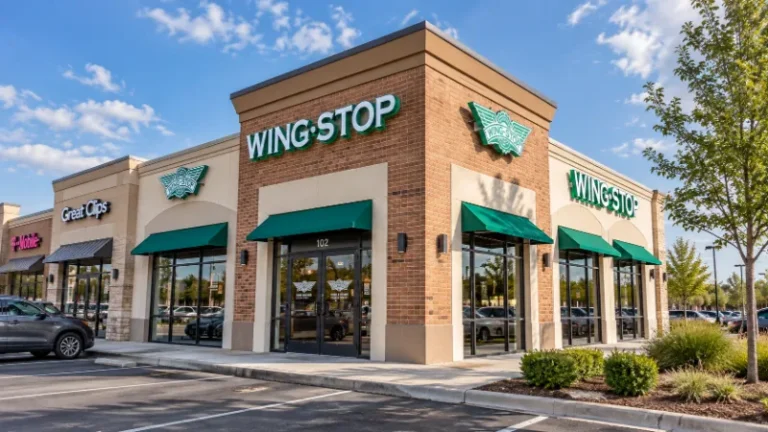
A shopping area containing supermarkets, cafés and convenience stores may have thousands of visitors but intense competition. A warehouse with 150 employees working late shifts and no nearby food outlet may generate much stronger vending demand.
Before buying equipment, examine:
- Number Of People Using The Site
- Opening Hours
- Shift Patterns
- Nearby Food And Drink Options
- Average Time People Spend There
- Existing Vending Competition
- Customer Demographics
- Security
- Power Availability
- Mobile Or Internet Connectivity
- Restocking Access
Try to identify the inconvenience the machine solves.
A vending machine performs best when customers think:
“This is easier than going somewhere else.”
Locations Worth Investigating
| Location | Why Vending May Work |
| Warehouses | Long Shifts And Limited Food Access |
| Offices | Regular Staff And Repeat Purchases |
| Gyms | Strong Demand For Drinks And Protein Products |
| Student Accommodation | Evening And Late-Night Demand |
| Hotels | Guests Need Convenient Essentials |
| Factories | Shift Workers Need Fast Food And Drinks |
| Garages | Customers Spend Time Waiting |
| Leisure Centres | Consistent Visitor Traffic |
| Hospitals | Long Opening Hours And Large Footfall |
Do not assume that a location belonging to one of these categories will automatically perform well. Individual site economics matter more than the label attached to the location.
Work Out the Economics Before Saying Yes to a Site
Turnover is not profit.
Every sale may need to cover:
- Wholesale Stock Cost
- Site Commission
- Card Processing
- Electricity
- Fuel
- Vehicle Costs
- Maintenance
- Machine Downtime
- Stock Waste
- Business Insurance
- Software Or Telemetry
- Your Time
A machine generating £1,000 per month can therefore be less attractive than it initially appears. Consider this illustrative planning example.
| Monthly Item | Example |
| Sales | £1,248 |
| Stock At 45% | £562 |
| Site Commission At 15% | £187 |
| Payment Fees At 3% | £37 |
| Travel, Maintenance And Other Reserve | £130 |
| Remaining Before Tax And Owner Labour | £332 |
These are not guaranteed vending industry averages. They simply demonstrate why founders should model every potential location before committing equipment to it.
Use a Simple Revenue Formula
A useful starting point is:
Average Sale Value × Daily Transactions × Trading Days = Monthly Revenue
Suppose a machine averages:
- £1.60 Per Purchase
- 30 Purchases Per Day
- 26 Active Days Per Month
Estimated monthly sales would be around £1,248. You can then deduct stock, commission, payments, servicing and other costs.
This makes it much easier to compare two proposed sites objectively.
How Much Does It Cost to Start a Vending Machine Business?
Startup costs vary considerably depending on whether you purchase new or refurbished equipment and whether the machine requires refrigeration, advanced payment technology or specialist installation. A beginner should budget for much more than the machine itself.
An illustrative first-machine budget could look like this:
| Startup Expense | Planning Example |
| Refurbished Machine | £2,500 |
| Cashless Reader | £450 |
| Initial Stock | £250 |
| Delivery And Installation | £300 |
| Insurance | £150 |
| Repair And Contingency Reserve | £350 |
| Total | £4,000 |
Actual supplier quotations may be substantially higher or lower.
If capital is limited, compare purchasing against leasing rather than automatically buying the cheapest second-hand machine available.
The cheapest machine can become expensive when spare parts are unavailable or engineers cannot repair it quickly.
New, Refurbished Or Leased: Which Machine Makes Sense?
The correct option depends on cash flow and the quality of the site.
Refurbished Machines
These can reduce the initial investment considerably.
Check:
- Machine Age
- Service History
- Parts Availability
- Warranty
- Refrigeration Condition
- Payment Reader Compatibility
- Energy Consumption
- Engineer Support
A professionally refurbished mainstream machine can sometimes be a better first purchase than an obscure new machine with limited UK technical support.
New Machines
New equipment normally provides better warranty protection, modern interfaces and stronger compatibility with cashless technology.
It becomes more attractive when the site has already demonstrated enough demand to justify the higher capital cost.
Leasing
Leasing can preserve cash but creates another fixed monthly expense. Calculate the total amount payable over the complete agreement, not simply the monthly figure. A machine generating weak sales still needs its lease payment made.
Choose the Machine Around What Customers Actually Need
Avoid choosing products simply because they are easy to obtain wholesale.
Match the machine to the audience.
Office
Consider:
- Coffee
- Breakfast Products
- Healthier Snacks
- Bottled Water
- Low-Sugar Drinks
- Lunch Options
Gym
Consider:
- Protein Drinks
- Protein Bars
- Water
- Electrolyte Drinks
- Low-Sugar Snacks
Warehouse Or Factory
Consider:
- Filling Snacks
- Hot Drinks
- Bottled Drinks
- Ready Meals
- Breakfast Products
Hotel
A conventional snack machine may work, but non-food vending can sometimes solve a bigger customer problem.
Possible products include:
- Toothbrushes
- Chargers
- Travel Adaptors
- Toiletries
- Earphones
Think of vending as automated convenience retail, rather than simply a machine that sells chocolate.
Cashless Payment Is No Longer an Optional Extra
Cashless vending has become mainstream.
The latest industry reporting indicates that cashless technology is installed on around 95% of paid UK vending machines, while mobile devices account for a significant share of cashless transactions.
A modern machine should therefore be evaluated for compatibility with:
- Contactless Debit And Credit Cards
- Apple Pay
- Google Pay
- Mobile Wallets
- Remote Sales Reporting
Card acceptance removes the problem of customers needing exact change, but transaction costs should be included in your financial model.
When comparing providers, look beyond the advertised transaction percentage. Check monthly charges, connectivity costs, settlement times and contract conditions.
Smart Technology Can Reduce Wasted Journeys
One of the biggest hidden expenses in vending is travelling to machines unnecessarily.
Imagine driving 12 miles to a machine only to discover that it needs five bottles of water and three chocolate bars.
Telemetry systems can provide remote information about:
- Product Sales
- Stock Levels
- Machine Faults
- Cash Levels
- Card Transactions
- Temperature Alerts
This allows an operator to plan replenishment based on demand rather than visiting every location according to a fixed schedule.
Telemetry becomes particularly useful as the number of machines grows. It can also show which products deserve additional capacity and which are occupying valuable shelf space without selling.
What Legal Requirements Apply to a UK Vending Machine Business?
The requirements depend partly on what you sell.
Food Business Registration
If your vending operation sells or handles food or drink, food business registration may be required.
The Food Standards Agency states that businesses selling, storing, handling or distributing food generally need to register with their local authority.
In England, Wales and Northern Ireland, registration should generally be completed at least 28 days before trading begins.
The registration system specifically recognises vending machines as a type of food business. Operators with machines or operating premises across different council areas should check which establishments need registering.
Rules and procedures can differ in Scotland, so businesses there should check requirements with Food Standards Scotland and the relevant local authority.
Food Hygiene And Allergens
Food operators also need suitable procedures for storage, hygiene, product rotation and allergen information.
The Food Standards Agency requires food businesses to provide appropriate allergen information and follow applicable food-labelling rules.
Prepacked goods should therefore retain clear, compliant labelling, while fresh-food vending requires more careful temperature and stock management.
Business Structure
A small operator may initially trade as a sole trader.
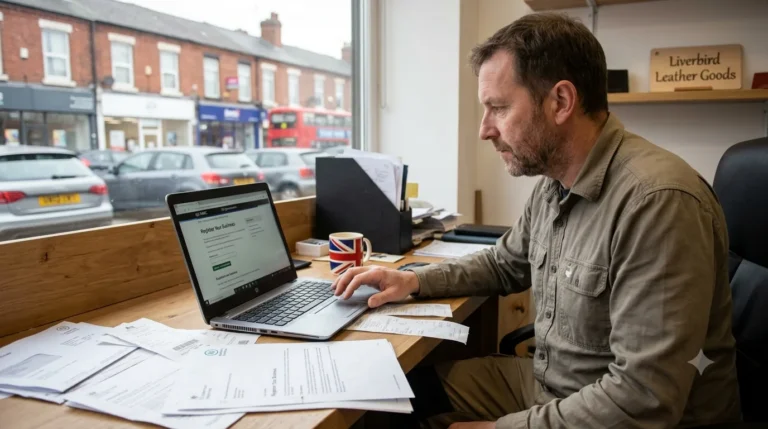
Under current rules, a sole trader generally needs to register for Self Assessment where annual gross trading income exceeds the £1,000 trading allowance.
A larger vending operation may instead choose a limited company.
Companies House’s digital incorporation fee is £100 in 2026.
Neither structure is automatically best for every founder. Consider tax, administration, liability, borrowing and future expansion before deciding.
VAT
As of the 2026/27 tax year, compulsory VAT registration generally applies once taxable turnover exceeds £90,000, subject to the relevant VAT rules.
This is particularly important when scaling a vending route because VAT applies to the business’s overall taxable turnover rather than the performance of an individual machine.
Do not assume every vending product receives identical VAT treatment. Product classification matters, so obtain accounting advice where necessary.
Insurance
Public liability, machine cover, stock insurance and business vehicle cover may all be worth considering depending on how the operation is structured.
If the business begins employing staff, Employers’ Liability insurance is generally compulsory and must provide at least £5 million of cover.
Get the Site Agreement in Writing
An informal promise from a manager is not enough protection when thousands of pounds of equipment is being installed.
A simple written vending location agreement should address:
- Who Owns The Machine
- Exact Installation Location
- Agreement Length
- Notice Period
- Electricity Responsibility
- Site Commission
- How Commission Is Calculated
- Access For Restocking
- Repairs And Maintenance
- Machine Removal
- Damage And Security
- Exclusivity
- Customer Refund Responsibility
Pay particular attention to commission.
For example, determine whether a 15% commission is calculated from gross sales, sales excluding VAT or another figure.
Small wording differences can materially change profitability over several years.
Do Not Overpay for a Prestigious Location

New operators can become attracted to impressive locations and agree to excessive commissions simply to secure them. That can destroy otherwise healthy unit economics.
A smaller warehouse offering good repeat demand and reasonable commercial terms may be significantly more valuable than a prestigious city-centre location charging high rent or commission.
Evaluate locations according to profit after servicing, not reputation.
Build a Product Mix Using Sales Data
Your opening product range is an experiment.
Do not become emotionally attached to it.
After several weeks, identify:
- Fastest-Selling Products
- Highest-Margin Products
- Products Frequently Selling Out
- Products Producing Waste
- Products Customers Request
- Items Occupying Space But Rarely Selling
Then change the mix.
If one energy drink sells out every Thursday while another drink remains untouched for three weeks, the shelf allocation is telling you what customers want.
Give more space to proven products.
Remove weak products unless they serve an important range or dietary purpose.
Stock Waste Can Quietly Destroy Profit
Traditional packaged snack vending has relatively manageable shelf life, but fresh-food vending introduces considerably greater stock risk.
A £4 sandwich that expires without being sold has generated:
£0 revenue and a 100% stock loss.
When adding fresh products:
- Start With Small Quantities
- Monitor Expiry Dates Closely
- Track Sales By Day
- Understand Weekend Demand
- Use First-In, First-Out Rotation
- Adjust Stock Around Holidays
- Watch Seasonal Changes
Fresh food can increase average transaction value, but only when demand is predictable enough to control waste.
Route Density Matters More Than Machine Count
Owning 20 machines does not necessarily create a better business than owning ten.
Consider two operators.
- Operator A: 10 machines within a five-mile area.
- Operator B: 10 machines spread across 50 miles.
Even if their sales are similar, Operator A may spend substantially less time and money on:
- Fuel
- Driving
- Restocking
- Maintenance Visits
- Emergency Call-Outs
This is why the real asset in vending is often not an individual machine. It is a dense network of productive locations. When expanding, try to add machines near existing sites before moving into completely new territories.
Set a Minimum Performance Level for Every Machine
Another gap in many vending business plans is deciding what happens when a location fails. Do not leave an underperforming machine in the same place indefinitely simply because moving it is inconvenient.
Set performance rules before installation.
For example:
If the machine fails to reach the required sales or contribution margin after an agreed testing period, review pricing, product range and placement. If performance still does not improve, relocate it.
A machine represents capital.
If £4,000 of equipment is producing little return at one location, it may generate considerably more somewhere else.
How to Find Vending Machine Locations?
Finding strong sites is essentially B2B sales.
Potential approaches include:
- Contacting Local Businesses Directly
- Visiting Industrial Estates
- Approaching Gyms
- Speaking With Facilities Managers
- Contacting Student Accommodation Operators
- Networking With Property Managers
- Approaching Independent Hotels
- Asking Existing Customers For Referrals
Do not lead with:
“Can I put my vending machine here?”
Instead explain the benefit to the site.
For example:
You provide employees with convenient food and drink without needing to operate a staffed canteen. We install, stock, clean and maintain the equipment and handle customer issues.
The location owner cares less about your vending ambition than what your service does for their employees, tenants or customers.
What Makes a Strong Vending Proposal?
Keep proposals simple.
Include:
- Machine Type And Dimensions
- Example Product Range
- Payment Options
- Installation Requirements
- Restocking Frequency
- Cleaning Arrangements
- Fault Response
- Insurance
- Site Commission If Offered
- Trial Period
- Contact Details
Professional presentation matters because the business owner is allowing external equipment onto their premises.
Your reliability becomes part of their customer or employee experience.
A Practical 90-Day Launch Approach
Instead of attempting to build a large vending route immediately, use the first three months to prove the model.
Days 1–30: Find And Validate
Focus on:
- Identifying One Customer Segment
- Contacting Potential Locations
- Visiting Promising Sites
- Estimating Transactions
- Comparing Equipment
- Modelling Profitability
- Checking Regulatory Requirements
Avoid purchasing equipment until you have a credible placement opportunity.
Days 31–60: Install And Learn
Once the first location is secured:
- Sign The Agreement
- Purchase Or Lease Equipment
- Arrange Insurance
- Register The Food Business If Required
- Install Cashless Payments
- Purchase Opening Stock
- Test Every Product Selection
- Create A Refund Process
Record sales from the first day.
Days 61–90: Optimise
Review:
- Sales Per Day
- Revenue Per Product
- Gross Margin
- Stock Waste
- Site Commission
- Payment Costs
- Restocking Time
- Travel Time
- Breakdowns
- Customer Requests
Do not rush into buying machine number two simply because machine number one is operational.
Buy the second when the first has provided enough information to improve your next decision.
When Should You Add Another Vending Machine?
Expansion should follow evidence, not excitement.
Consider another machine when:
- The Existing Site Is Consistently Profitable
- Stock Demand Is Predictable
- Restocking Processes Work
- You Have A Repair Reserve
- Another Good Location Is Secured
- The New Site Fits Your Existing Route
Reinvesting profits can gradually reduce reliance on borrowing.
As the route grows, centralised purchasing can also improve stock prices and simplify replenishment.
The Biggest Mistakes New Vending Operators Make
Most problems originate before the first sale.
Watch for these mistakes:
- Buying A Machine Without Having A Location
- Confusing Sales With Profit
- Accepting Excessive Site Commission
- Buying Unsupported Second-Hand Equipment
- Ignoring Card Processing Costs
- Driving Too Far Between Locations
- Carrying Too Much Fresh Stock
- Failing To Track Product-Level Sales
- Relying On Verbal Site Agreements
- Scaling Before Proving The First Location
The business becomes considerably easier to manage when every machine is treated as its own mini retail unit. Know exactly what each machine sells, costs and contributes.
Is a Vending Machine Business Passive Income?
Not initially.
Machines sell without an employee standing beside them, but someone still needs to:
- Find Locations
- Buy Stock
- Refill Machines
- Clean Equipment
- Handle Refunds
- Repair Faults
- Review Pricing
- Replace Expired Products
- Manage Accounts
- Negotiate Site Agreements
Technology can automate parts of the operation, particularly payments, stock reporting and fault monitoring. As the route becomes larger, restocking and servicing can also be delegated.
Vending is therefore better described as a semi-automated retail business than completely passive income.
Final Thoughts
Starting a vending machine business in the UK does not require dozens of machines or a large warehouse from day one. A more sensible approach is to secure one promising location, model the economics carefully and use a reliable machine to test genuine customer demand.
The machine itself is only part of the business.
Location quality, product selection, site commission, route efficiency, cashless payments, maintenance and stock control determine whether the numbers actually work.
Start with one profitable location rather than several average ones. Once the first machine produces consistent results, use the data to improve the next location and gradually build a compact, efficient vending route.
Frequently Asked Questions
How Much Money Do You Need to Start a Vending Machine Business in the UK?
A small one-machine operation will usually require several thousand pounds once the machine, payment hardware, delivery, stock, insurance and contingency funds are considered. Costs vary substantially according to equipment type and whether the machine is new, refurbished or leased.
Can I Start a Vending Machine Business With One Machine?
Yes. Starting with one machine can actually reduce risk because you can learn about stock, repairs, pricing and location economics before investing in additional equipment.
Do You Need a Licence for a Vending Machine in the UK?
There is no single universal vending-machine licence covering every type of operation. However, food vending businesses may need local-authority food-business registration, and other legal requirements depend on the products sold and how the business operates.
Do Vending Machines Need Food Hygiene Registration?
Businesses selling, handling, storing or distributing food and drink generally need to consider food-business registration requirements. In England, Wales and Northern Ireland, applicable businesses should normally register with their local authority at least 28 days before trading.
Where Is the Best Place to Put a Vending Machine?
The best location combines regular potential customers with limited convenient alternatives. Warehouses, offices, gyms, factories, student accommodation and leisure facilities can work, but every individual site should be assessed separately.
How Profitable Is a Vending Machine Business?
Profit depends on sales volume, stock margin, commission, payment fees, servicing costs and route efficiency. A high-turnover machine can still generate weak profit if its operating costs are excessive.
Should I Buy a Vending Machine Before Finding a Location?
Usually not. Securing or at least validating a suitable location first reduces the risk of purchasing expensive equipment that cannot generate revenue.