What Is Entrepreneurship? | A Guide for Founders

Entrepreneurship is the process of identifying a commercial opportunity, bringing together the resources needed to pursue it, taking calculated risks and building an organisation that creates value.
An entrepreneur is the person who leads that process and accepts responsibility for the decisions, risks and potential rewards involved.
To define entrepreneurship and entrepreneur simply, the entrepreneur is the person, while entrepreneurship is the activity or process. A founder may be an entrepreneur, but entrepreneurship continues beyond the moment a business is created.
It can involve testing ideas, raising finance, finding customers, improving products, hiring people, entering new markets and adapting the business as conditions change.
For founders, understanding that distinction matters because entrepreneurship is not simply about owning a company. It is about recognising opportunities and turning them into commercially viable outcomes.
What Do Entrepreneur And Entrepreneurship Mean?
An entrepreneur is someone who organises, manages and takes on the risks associated with a business or enterprise. Merriam-Webster describes the term around organising, owning, managing and assuming business risk.
Entrepreneurship, by comparison, describes the role, activity and process of being entrepreneurial. It includes opportunity identification, product development, market testing, financing, commercial decision-making and business growth.
The distinction can be summarised quickly:
| Term | Simple Meaning | Main Focus |
| Entrepreneur | The person creating or developing the venture | Leadership, ownership, decisions and risk |
| Entrepreneurship | The process of creating and developing ventures | Opportunity, innovation, execution and growth |
| Enterprise | The business, project or commercial activity itself | Delivering products or services |
Where Does The Word Entrepreneur Come From?
The word has French origins. It comes from entreprendre, meaning to undertake. Merriam-Webster traces the English word back to French and records its first known English use in the eighteenth century.
That origin still reflects what entrepreneurs do today. They undertake a commercial project despite uncertainty about demand, competition, finance and future profitability.
Entrepreneur Vs Small Business Owner: What Is The Real Difference?
An entrepreneur and a small business owner can be the same person, but the terms do not always mean exactly the same thing.
A common shorthand is that every entrepreneur is a business owner, but not every business owner is necessarily an entrepreneur. It is useful for explaining the difference in ambition and behaviour, although it is not a legal definition.
Someone may buy an established local shop primarily to earn a stable income. Another person may create a new retail model, develop proprietary technology, raise investment and aim to expand internationally.
Both own businesses, but the second activity is more commonly described as entrepreneurship.
| Factor | Entrepreneur | Traditional Small Business Owner |
| Main Objective | Create, innovate or scale | Generate sustainable income |
| Growth Intent | Often seeks substantial expansion | May prefer manageable, steady growth |
| Innovation | Frequently central to the business model | May use an established model |
| Risk Appetite | Typically accepts higher uncertainty | Often prioritises stability |
| Funding | May use angel, venture capital or growth finance | Often uses savings, loans or retained profits |
| Legal Structure | Can be sole trader, partnership or company | Can use the same structures |
| Decision-Making | Strong focus on new markets and opportunities | Strong focus on existing operations |
| Exit Strategy | Sale, acquisition, succession or IPO may be planned | Long-term personal ownership is common |
| Geographic Ambition | Can be national or international | Often local or regional |
Legal structure alone does not decide whether someone is an entrepreneur. An entrepreneur can operate as a sole trader, while a conventional business owner can operate through a limited company.
However, entrepreneurs pursuing external investment, multiple shareholders or rapid expansion are more likely to consider incorporation because a company provides a separate legal structure and can make equity investment easier to organise.
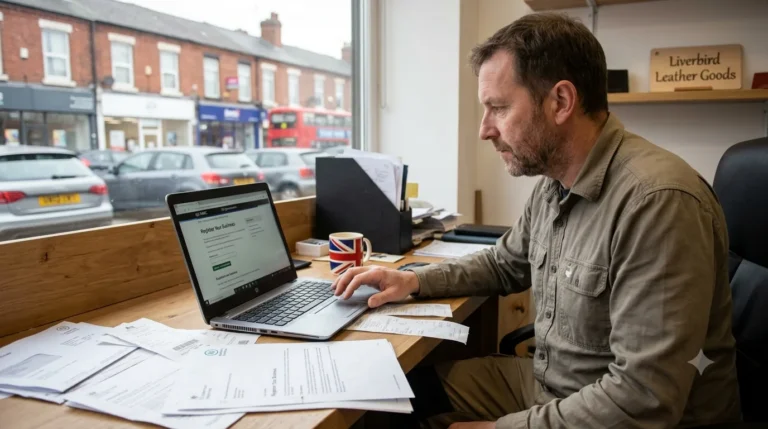
Anyone turning an entrepreneurial project into an actual business should also understand when they may need to register a business with HMRC, since tax and registration responsibilities depend on the structure and income involved.
What Is The Difference Between An Entrepreneur And Entrepreneurship?
The difference extends beyond simply saying one is a person and the other is a process.
| Area | Entrepreneur | Entrepreneurship |
| Definition | Individual who creates or develops a venture | Process of identifying, creating and developing opportunities |
| Nature | A person or founder | A commercial activity or discipline |
| Ownership | May have a direct ownership stake | Can exist independently of one individual’s ownership |
| Scope | Focuses on the founder’s role | Covers the entire entrepreneurial process |
| Decision-Making | Makes key strategic decisions | Includes decision-making throughout the business lifecycle |
| Timeframe | Often associated strongly with creation and early growth | Can continue through launch, growth, diversification and renewal |
| Responsibility | Personally accountable for many major decisions | Includes finance, marketing, operations, strategy and innovation |
| Risk | Accepts personal, financial and career risk | Includes identifying, measuring and managing business uncertainty |
| Impact | Builds and leads the venture | Can create jobs, competition, innovation and economic value |
Entrepreneurship should therefore be viewed as an ongoing process rather than a single event.
Registering a company does not make entrepreneurship complete. A founder still has to prove demand, deliver value, control costs and make decisions about growth.
What Is The Purpose Of Enterprise And How Does It Add Value?
Businesses generally exist to produce goods or services, satisfy customer needs and create value.
For an entrepreneur, the important question is not merely whether something can be sold. It is whether customers believe the product or service is worth more than the resources required to provide it.
Added value is broadly the difference between the cost of inputs used to create a product or service and the price customers are willing to pay.
For example, ingredients may cost relatively little individually, but a restaurant creates additional value through preparation, convenience, branding, location and service.
Businesses can add value in several ways:
| Method | How It Creates Value | Example |
| Branding | Builds recognition and customer trust | A clothing company develops a distinctive identity |
| Convenience | Saves customers time or effort | Delivery businesses make products easier to access |
| Quality | Provides better performance or reliability | Premium products use stronger materials or engineering |
| Design | Improves appearance, usability or experience | Consumer technology becomes easier to use |
| USP | Gives customers a reason to choose one company | A service solves a problem differently from competitors |
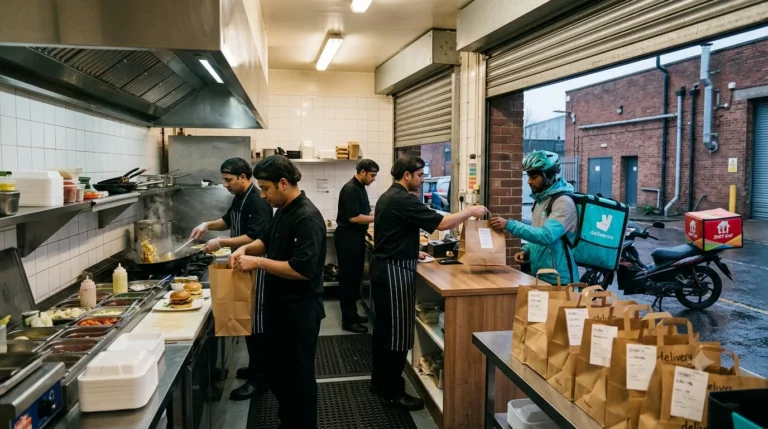
New operating models can create value mainly through convenience. A dark kitchen business, for example, removes the traditional dine-in element and concentrates on producing meals for delivery.
Entrepreneurs who understand added value are generally better positioned to compete without relying solely on low prices.
What Are The Risks And Rewards Of Entrepreneurship?
Entrepreneurship involves uncertainty. A new business may perform significantly better than expected, but it may also fail to achieve enough demand to survive.
Main Risks And Rewards
| Risks | Potential Rewards |
| Financial loss | Business profits |
| Business failure | Financial independence |
| Loss of regular salary | Control over working decisions |
| Uncertain cash flow | Building a valuable asset |
| Personal guarantees or debt | Capital growth |
| Competitive pressure | Professional recognition |
| Long working hours | Personal satisfaction |
| Operational responsibility | Opportunity to create jobs and wider impact |
What Is A Calculated Risk?
A calculated risk is a risk taken after gathering information, considering the possible outcomes and deciding that the potential reward justifies the remaining uncertainty.
It is different from simply taking a gamble.
For example, launching a product without researching customer demand is largely speculative. Testing prototypes, surveying customers, analysing competitors, estimating costs and launching initially on a limited scale turns the decision into a more calculated risk.
Entrepreneurs can reduce risk by:
- Conducting Market Research Before Investing Heavily
- Testing A Minimum Viable Product
- Preparing Realistic Cash Flow Forecasts
- Maintaining Suitable Cash Reserves
- Diversifying Suppliers Where Necessary
- Setting Spending Limits For Experimental Projects
- Reviewing Contracts And Legal Responsibilities
- Arranging Appropriate Business Protection
Insurance cannot remove commercial uncertainty, but appropriate cover can reduce the financial consequences of certain incidents. Founders should therefore consider what business insurance they may need as the company develops.
Why Do New Business Ideas Emerge?
Entrepreneurial opportunities often appear because something in the market has changed.
Changing Customer Preferences
Consumer habits continually evolve.
Demand for plant-based food, flexible working, subscription services, sustainable products and same-day delivery has created opportunities for businesses that respond faster than established competitors.
Entrepreneurs watch for these changes and ask whether existing products still meet customer expectations.
Changes In Technology
Technology can create entirely new markets while making older business models cheaper to operate.
Cloud computing reduced the amount of infrastructure required to launch software companies.
E-commerce reduced the need for physical retail premises. Generative AI is allowing businesses to automate parts of customer service, research, administration and product development.
Technology can therefore create opportunities both for companies producing new technology and for entrepreneurs applying it to traditional industries.
Existing Products Becoming Obsolete
When customer behaviour or technology changes, older products can lose relevance.
That creates opportunities for alternatives.
Streaming affected physical media, smartphones replaced many standalone devices and digital payments reduced reliance on cash in many environments.
Entrepreneurs frequently succeed not by creating demand from nothing, but by recognising where existing solutions are becoming less useful.
Invention Vs Innovation
These terms are closely connected but different.
| Concept | Meaning |
| Invention | Creating something substantially new that did not previously exist |
| Innovation | Applying, adapting or improving an idea to create greater value |
Entrepreneurship does not always require an invention.
A founder may build a successful business by improving delivery, pricing, usability, branding or customer experience around a product that already exists.
Push Vs Pull Factors: Why Do People Become Entrepreneurs?
People start businesses for very different reasons.
Some are pulled towards entrepreneurship because they see an opportunity. Others are pushed towards it because their employment or personal circumstances change.
| Pull Factors | Push Factors |
| Spotting a market opportunity | Redundancy |
| Desire for independence | Difficulty finding suitable employment |
| Potential financial reward | Dissatisfaction with a job |
| Passion for a product or industry | Limited progression at work |
| Desire to build wealth | Need for more flexible working |
| Opportunity created by new technology | Career or life-stage change |
| Desire to make a social impact | Unexpected loss of employment |
Pull-driven founders are not automatically more successful than push-driven founders.
What matters commercially is whether there is genuine customer demand, sufficient resources and a business model capable of producing sustainable returns.
What Are The Main Types Of Entrepreneurship?
Entrepreneurship can take several forms depending on the founder’s objectives, financing strategy and desired level of growth.
Small Business Entrepreneurship
This includes independent shops, consultants, tradespeople, agencies, restaurants and service businesses.
The founder may focus primarily on profitability and sustainable income rather than aggressive expansion.
Scalable Startup Entrepreneurship
A scalable startup is built with substantial expansion in mind.
Technology companies often follow this model because software can potentially serve a much larger number of customers without costs increasing at exactly the same rate.
These ventures are also more likely to seek angel or venture capital funding.
Social Entrepreneurship
Social entrepreneurs combine commercial activity with a social or environmental objective.
Revenue still matters because the organisation must remain financially viable, but profit is not necessarily the only measure of success.
Innovative Entrepreneurship
Innovative entrepreneurs create or commercialise new products, processes or technologies.
James Dyson’s development of bagless vacuum technology is a familiar UK example of product-focused innovation supporting business growth.
Serial Entrepreneurship
Serial entrepreneurs create multiple businesses over their careers.
Richard Branson is a widely recognised example because the Virgin brand has been involved across numerous industries.
Lifestyle Entrepreneurship
Some founders build businesses around a preferred lifestyle rather than maximising company size.
The objective may be independence, location flexibility, specialist work or control over working hours.
Intrapreneurship
Intrapreneurship occurs inside an existing organisation.
An intrapreneur is an employee or executive who develops new products, services or ventures while working within the resources and structure of an established company. Merriam-Webster defines the term around developing new enterprises within a corporation.
The important distinction is:
Entrepreneur = Builds a venture independently
Intrapreneur = Develops entrepreneurial ideas within an existing organisation
Intrapreneurs normally face less direct personal financial risk because the employer provides capital and infrastructure, although they still manage commercial uncertainty.
What Are Some Real-World Examples Of Entrepreneurs?
Entrepreneurship appears differently depending on the industry and business model.
| Entrepreneur | Business Connection | Entrepreneurial Characteristic |
| Elon Musk | Tesla, SpaceX and other ventures | Technology and high-risk innovation |
| Jeff Bezos | Amazon | Scalable digital commerce |
| Richard Branson | Virgin businesses | Serial entrepreneurship and branding |
| James Dyson | Dyson | Engineering and product innovation |
| Oprah Winfrey | Media and production businesses | Personal brand and media entrepreneurship |
| Ben Francis | Gymshark | UK digital-first brand building and international scaling |
These examples also demonstrate why entrepreneurship should not be restricted to technology startups.
A retailer, manufacturer, media business, consultancy or hospitality company can be entrepreneurial when it identifies opportunities, creates value and builds a business around them.
What Is An Entrepreneurial Mindset?
An entrepreneurial mindset is a way of approaching commercial problems and opportunities.
Successful founders do not necessarily share the same personality, but several capabilities are repeatedly useful.
- Opportunity recognition helps founders identify unmet customer needs before competitors.
- Customer focus prevents a company from building products solely around the founder’s assumptions.
- Financial awareness helps entrepreneurs understand margins, working capital, cash flow and funding requirements.
- Adaptability becomes important when technology, regulation or customer preferences change.
- Resilience helps founders respond when launches fail, customers leave or plans need to change.
- Decision-making under uncertainty is particularly important because founders rarely have complete information.
The strongest entrepreneurial mindset combines ambition with evidence. Confidence alone is not a business model.
What Challenges Do Entrepreneurs Face?
Starting and growing a company can expose founders to several pressures at once.
Cash flow is often one of the most immediate. A business can make accounting profits while still struggling if customers pay slowly or major expenses fall due before cash is received.
Customer acquisition is another challenge. Having a good product does not guarantee that enough customers will discover or trust it.
Founders may also need to deal with recruitment, tax, regulatory compliance, data protection, supplier relationships and contracts.
Growth creates its own problems. Processes that work with ten customers may not work with 10,000. Founders therefore have to decide when to automate systems, hire managers or invest in additional capacity.
Funding can become important where the business requires investment before revenue catches up.
Entrepreneurship therefore involves balancing opportunity against resources rather than pursuing growth at any cost.
How Is Entrepreneurship Evolving In The UK?
The UK’s business population demonstrates how significant entrepreneurship and small business activity are to the economy.
The Department for Business and Trade estimated that the UK had 5.7 million private-sector businesses at the start of 2025.
Around 5.64 million were small businesses, while SMEs collectively represented 99.85% of the private-sector business population. About 75% had no employees other than their owners.
Those figures demonstrate an important point: entrepreneurship does not always mean building a company employing hundreds of people. Much of UK business activity consists of founders, sole traders and very small companies.
Business creation also remains significant.
The Office for National Statistics recorded approximately 317,000 business births in 2024, compared with around 280,000 business deaths.
The UK business birth rate was 11.1%, while the death rate fell to 9.8%. ONS also identified 14,330 high-growth businesses measured by employment during 2024.
Funding Is Becoming More Diverse
Entrepreneurs are also operating in a broader financing market.
The British Business Bank’s 2026 finance report found that around half of smaller businesses were using external finance during Q3 2025, with credit cards, overdrafts and leasing or hire purchase among the most commonly used forms. SME bank lending reached £68 billion.
Government-backed startup finance also remains significant. The British Business Bank reports that the Start Up Loans programme has supported more than 125,000 business ideas with over £1.25 billion of loans.
That matters because not every entrepreneur has access to venture capital. Many businesses are financed through personal savings, loans, retained profits, asset finance or a combination of funding sources.
Entrepreneurial Ambition Is Not Limited To One Founder Profile
The British Business Bank’s 2026 research also found differences in growth ambitions across founder groups.
It reported that 71% of Ethnic Minority-led businesses aimed to become significantly larger, compared with 40% of White-led businesses surveyed.
Separate analysis of the Start Up Loans programme previously found that women represented 41% of recipients, compared with 20% of zero-employee businesses being women-led in the comparison data.
These figures reinforce a broader point. UK entrepreneurship encompasses a wide range of founders, sectors and ambitions, from solo businesses seeking independence to high-growth companies seeking international expansion.
Is Entrepreneurship The Same As Starting A Business?

Not entirely.
Starting a business is an important entrepreneurial activity, but entrepreneurship is broader.
A person can start a conventional business using an established model without introducing significant innovation. At the same time, an entrepreneur can develop new products and business models inside an existing company through intrapreneurship.
Entrepreneurship is therefore better understood as the process of identifying opportunities, organising resources and creating value under conditions of uncertainty.
Starting a company is one possible result of that process.
Conclusion
Entrepreneur and entrepreneurship are closely connected terms, but they describe different things.
An entrepreneur is the person who identifies an opportunity, organises resources and accepts responsibility for pursuing it. Entrepreneurship is the wider process through which opportunities are investigated, tested, financed, launched and developed.
Entrepreneurs also differ from conventional business owners in areas such as growth objectives, innovation, financing strategy and appetite for calculated risk, although there is no single legal structure that determines who qualifies as an entrepreneur.
For UK founders, entrepreneurship increasingly covers everything from sole-trader businesses and local services to technology startups, innovative consumer brands and internationally scalable companies.
What connects them is not simply ownership. It is the ability to recognise an opportunity, understand what customers value and turn that insight into a sustainable business.
FAQs
What Is Entrepreneurship In Simple Terms?
Entrepreneurship is the process of identifying a business opportunity, organising resources, accepting calculated risks and building something that creates value for customers.
What Is The Main Difference Between Entrepreneur And Entrepreneurship?
An entrepreneur is the individual pursuing the opportunity. Entrepreneurship is the overall process of creating, developing and growing the venture.
What Is The Difference Between An Entrepreneur And A Small Business Owner?
Entrepreneurs are generally associated with innovation, opportunity and growth, while some small business owners prioritise stable income and long-term operation. The categories can overlap considerably.
What Does Calculated Risk Mean In Entrepreneurship?
Calculated risk means making a business decision after researching the possible costs, benefits and outcomes rather than taking an uninformed gamble.
What Is The Difference Between An Entrepreneur And An Intrapreneur?
An entrepreneur develops a venture independently, while an intrapreneur develops new commercial ideas or projects within an existing organisation.
Where Does The Word Entrepreneur Come From?
Entrepreneur comes from French and is linked to entreprendre, meaning to undertake. The term reflects the idea of taking responsibility for a commercial undertaking.
Does An Entrepreneur Have To Own A Limited Company?
No. Entrepreneurs can operate as sole traders, partnerships or limited companies. Legal structure depends on factors such as liability, taxation, investment and growth plans.
What Skills Does An Entrepreneur Need?
Useful entrepreneurial skills include opportunity recognition, financial management, communication, customer research, problem-solving, negotiation, adaptability and decision-making under uncertainty.