

Business Loans for Startup Companies: A Complete Guide

Are you struggling to secure funding for your startup? One of the biggest challenges for new businesses is accessing enough capital to cover initial expenses, maintain cash flow and invest in growth.
Business loans for startup companies can provide funding for equipment, stock, premises, marketing, technology and other early-stage costs. However, the options available to a brand-new business are different from those available to a company with one or two years of trading history.
In the UK, founders can consider the government-backed Start Up Loans programme, high-street bank loans, fintech lenders and business finance marketplaces.
One important change for 2026 is that the government Start Up Loan interest rate increased from 6% to 7.5% a year on 6 April 2026. At the same time, eligibility for a first loan was expanded to businesses that have been trading for up to 60 months.
This guide explains the main types of startup business loans, current providers, borrowing costs, eligibility requirements and how to improve your chances of securing finance.
What Are Business Loans for Startup Companies?
Business loans for startup companies provide funding to entrepreneurs and early-stage businesses that need money to establish, operate or grow their ventures.
They can help pay for:
- Equipment And Machinery: Purchasing equipment needed to operate the business
- Stock And Inventory: Funding initial or additional stock purchases
- Marketing: Paying for websites, advertising, branding and customer acquisition
- Premises: Covering deposits, refurbishment or fit-out costs
- Technology: Purchasing software, computers and other systems
- Working Capital: Maintaining enough cash to meet everyday expenses
Startup finance differs from many conventional business loans because a new company may have limited revenue, no filed accounts and little business credit history.
Lenders may therefore place greater emphasis on the founder’s personal credit history, business plan, cash flow forecast and ability to afford repayments.
The government’s Start Up Loan is particularly different because it is an unsecured personal loan used for business purposes, rather than borrowing taken out directly by the company. It does not require business assets or a guarantor as security.
What Types of Business Loans Are Available for Startups in the UK?
Startup companies in the UK can consider several forms of finance. The most suitable option depends on how long the business has been operating, its revenue, credit profile and the amount required.
- Government-Backed Start Up Loans: The Start Up Loans programme currently allows eligible applicants to borrow between £500 and £25,000 at a fixed 7.5% annual interest rate over one to five years.
- Bank Business Loans: High-street banks including HSBC, NatWest, Lloyds and Metro Bank provide loans subject to affordability, credit assessment and business circumstances.
- Unsecured Business Loans: Fintech and alternative lenders may provide finance without requiring property or business assets as security, although personal guarantees may sometimes be required.
- Business Finance Marketplaces: Platforms such as Funding Options by Tide compare finance from multiple lenders rather than providing every loan directly themselves.
- Growth Guarantee Scheme Finance: Eligible smaller businesses may also access loans through accredited lenders under the Growth Guarantee Scheme. The scheme has been extended until 31 March 2030, although the borrower remains responsible for repaying the debt.
Angel investment, venture capital and equity crowdfunding are also potential ways to fund a startup, although these are investments rather than business loans.
Are You Eligible for a Startup Business Loan?
Eligibility varies considerably between lenders.
A founder applying before the business has generated substantial revenue will generally face different requirements from an established company seeking expansion finance.
Common factors include:
- Personal Credit History: Startup lenders frequently examine the founder’s personal credit position because the business may have little credit history of its own
- Business Plan: A clear plan explaining the business model, market, customers, expected costs and growth strategy can strengthen an application
- Cash Flow Forecast: Lenders need evidence that future income should be sufficient to meet repayments
- Trading History: Some lenders accept very new businesses while others require at least 12 months of trading
- Loan Purpose: Applicants should clearly explain why funding is required and how it will support the business
- Existing Debt: High levels of personal or business borrowing can reduce affordability
- Personal Guarantee: Some commercial business loans may require directors or owners to guarantee repayment personally
For the government Start Up Loans programme, the assessment includes the viability of the business, a business plan, cash flow forecast and a Personal Survival Budget used to assess whether repayments are affordable.
How to Apply for a Startup Business Loan in the UK?
Applying for business loans for startup companies normally involves the following steps:
- Assess Your Financing Needs: Calculate exactly how much funding the business requires and what the money will be used for.
- Check Affordability: Work out how much the business can realistically repay each month without damaging cash flow.
- Research Lenders: Compare government-backed finance, banks, alternative lenders and marketplaces.
- Prepare Your Business Plan: Include information about your product or service, target market, competition and growth strategy.
- Prepare Financial Forecasts: Produce realistic sales, expenditure and cash flow forecasts.
- Review Your Credit Position: Check both personal and business credit information where relevant.
- Submit Your Application: Provide accurate information and any supporting documents requested.
- Compare the Full Cost: Check the interest rate, APR, fees, total amount repayable, personal guarantee requirements and early repayment rules before accepting an offer.
Avoid selecting a loan solely because the monthly repayment appears affordable. A longer repayment term can reduce the monthly amount while increasing the total interest paid.
Top 10 Startup Loan Providers in the UK
Not every provider below is suitable for a pre-revenue business. Some accept startups, while others are more appropriate once the business has established a trading history.
1. Start Up Loans Government-Backed Scheme
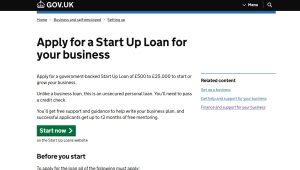
The Start Up Loans programme remains one of the clearest funding options for genuinely new UK businesses.
It provides an unsecured personal loan for business purposes rather than lending directly to the company.
A major change took effect on 6 April 2026, when the fixed interest rate increased from 6% to 7.5% a year. Eligibility for first-time applicants was also expanded from businesses trading for up to 36 months to those trading for up to 60 months.
Approved borrowers also receive 12 months of free mentoring.
Multiple owners or partners can apply separately. Up to four eligible applicants can borrow £25,000 each, subject to a maximum of £100,000 for one business.
Loan Details:
- Loan Amount: £500 to £25,000 per applicant
- Maximum Per Business: £100,000
- Interest Rate: 7.5% fixed per year
- Repayment Term: 1 to 5 years
- Security: Unsecured
- Arrangement Fees: None
- Early Repayment Fee: None
- Support: 12 months of free mentoring
- Trading Age: First loans can be available to businesses trading for up to 60 months
2. Barclays Business Loans

Barclays continues to provide business lending for companies looking to start, invest or expand.
Unlike the Start Up Loans programme, Barclays does not offer one universal startup loan rate to every applicant. The amount available and borrowing cost depend on the business, its financial circumstances and the bank’s credit assessment.
Barclays also participates in government-backed business finance, including the Growth Guarantee Scheme.
For a startup, approval is therefore likely to depend heavily on the quality of the business proposition, expected income, affordability and the financial position of the owners.
Loan Details:
- Loan Amount: Subject to individual business assessment
- Interest Rate: Personalised according to the business and facility
- Repayment: Based on the agreed finance arrangement
- Eligibility: Subject to credit and affordability checks
- Best Suited To: Businesses that can demonstrate a viable repayment plan
Barclays currently directs businesses to its business loan calculator and lending eligibility tools rather than advertising one universal startup-loan price.
3. HSBC Small Business Loan
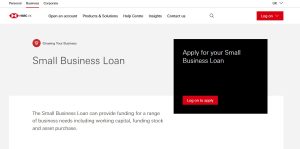
HSBC’s current Small Business Loan provides straightforward fixed-rate borrowing for smaller funding requirements.
Businesses can borrow between £1,000 and £25,000, with repayment terms ranging from 12 months to 10 years.
As of September 2026, HSBC advertises representative APRs of 11.3% for loans up to and including £10,000 and 8.6% for loans above £10,000, although the actual rate offered depends on the applicant’s circumstances.
The interest rate is fixed for the loan term and HSBC currently charges no arrangement fee.
Loan Details:
- Loan Amount: £1,000 to £25,000
- Repayment Term: 1 to 10 years
- Interest Rate: Fixed
- Representative APR: 11.3% up to £10,000 and 8.6% above £10,000
- Arrangement Fee: None
- Eligibility: Subject to credit status and business assessment
HSBC also offers larger commercial borrowing where a business needs more than £25,000.
4. NatWest Small Business Loan
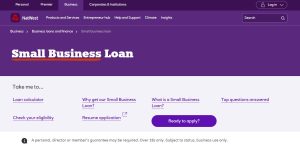
NatWest has expanded the borrowing range available through its Small Business Loan.
Businesses can currently apply for between £1,000 and £100,000, compared with the lower limits quoted in many older guides.
Loans have a fixed interest rate and repayment terms between one and seven years.
NatWest currently states that there are no set-up, early repayment or early closure fees on its Small Business Loan. However, personal, director or member guarantees may be required.
The bank also confirms that applicants do not need to maintain a NatWest Business Current Account to obtain the loan.
Loan Details:
- Loan Amount: £1,000 to £100,000
- Repayment Term: 1 to 7 years
- Interest Rate: Fixed and personalised
- Set-Up Fee: None
- Early Repayment Fee: None
- Repayment Holiday: Not available on the Small Business Loan
- Personal Guarantee: May be required
5. Funding Circle Business Loans

Funding Circle remains a major UK alternative business lender, but it should not be presented as a loan for brand-new startups.
Funding Circle currently states that businesses generally need at least one year of trading history to qualify for its business loans.
That makes it more appropriate for an early-stage business that has already begun trading rather than a founder who has not yet launched.
Funding Circle currently advertises loans between £10,000 and £750,000 for limited companies, with rates starting from 6.9% per year and decisions potentially available quickly.
Funding Circle should also no longer simply be described as a traditional peer-to-peer startup lending platform.
Loan Details:
- Loan Amount: Commonly £10,000 to £750,000 for company loans
- Repayment Term: 6 months to 6 years for business loans
- Interest Rate: From 6.9% per year
- Trading History: At least 1 year for standard business loans
- Early Settlement: No fee for full early repayment on eligible company loans
- Best Suited To: Established early-stage businesses rather than pre-revenue startups
6. iwoca Business Loans

iwoca remains one of the more flexible alternative lenders for young businesses.
The lender says it considers businesses ranging from newer startups to established companies.
Current borrowing can range from £1,000 to £1 million, with the exact credit limit depending on factors including turnover, business performance and creditworthiness.
iwoca’s current pricing starts from 1.5% per 30 days, although rates are personalised. Its representative APR is considerably higher than many mainstream bank loans, so borrowers should compare the total repayment carefully rather than only looking at application speed.
There are no early repayment fees and interest is charged based on the outstanding balance and the period for which funds are used.
Loan Details:
- Loan Amount: £1,000 to £1 million
- Maximum Term: Up to 5 years for eligible finance
- Interest Rate: From 1.5% per 30 days
- Representative APR: 49% on the example currently used for loans of £25,000 or less
- Decision: Often within one working day
- Early Repayment Fee: None
- Startup Applications: Newer businesses can be considered
7. Tide Business Finance Through Funding Options

Tide should no longer be described as simply providing its own unsecured startup loans of up to £500,000.
Tide has combined its business finance offering with Funding Options, creating a marketplace that compares products from more than 80 lenders.
Through the platform, businesses can explore unsecured loans, short-term loans, working capital finance, asset finance and other products.
The marketplace currently advertises finance ranging from £1,000 to £20 million, although this is across multiple lenders and finance types rather than one Tide loan.
Loan Details:
- Finance Range: £1,000 to £20 million across participating lenders
- Lender Network: More than 80 lenders
- Products: Unsecured loans, working capital, asset finance and other options
- Initial Eligibility Check: Can be completed without affecting your credit score
- Funding Speed: Some finance may become available in around 24 hours
- Eligibility: Depends on the lender and product selected
This can be useful for startups wanting to compare multiple routes, but approval criteria vary significantly between lenders.
8. Virgin StartUp Loans

Virgin StartUp remains an official Business Support Partner of the government’s Start Up Loans programme.
It is important to understand that this is not a separate Virgin loan product with different rates. Applicants supported through Virgin StartUp access the same government-backed Start Up Loans programme.
Virgin StartUp helps entrepreneurs prepare their business plans, cash flow forecasts and funding applications.
The official Start Up Loans programme currently lists Virgin StartUp as one of its Business Support Partners.
Loan Details:
- Loan Amount: £500 to £25,000 per eligible applicant
- Maximum Per Business: £100,000 subject to multiple eligible applicants
- Interest Rate: 7.5% fixed per year
- Repayment Term: 1 to 5 years
- Security: Unsecured personal loan for business purposes
- Mentoring: 12 months of support for first-loan recipients
The same 7.5% rate applies because the underlying funding comes from the Start Up Loans programme.
9. Lloyds Bank Small Business Loans

Lloyds Bank replaces Esme Loans in this updated list.
Esme Loans should not appear in a current 2026 startup lending guide because NatWest closed the platform to new loan applications in 2021.
Lloyds currently provides Small Business Loans from £1,000 to £50,000 and advertises an 11.2% representative APR for loans in this range.
Repayment terms can run from one to 10 years for online business borrowing, depending on the facility.
Lloyds also states that a lack of credit history is not automatically a barrier and specifically acknowledges financing needs for startups.
Loan Details:
- Loan Amount: £1,000 to £50,000 online
- Repayment Term: 1 to 10 years
- Representative APR: 11.2% fixed
- Arrangement Fee: None on the Small Business Loan
- Early Repayment Fee: None on the Small Business Loan
- Funding Speed: Potentially within 48 hours after approval
- Business Account: A Lloyds Business Current Account is not compulsory
10. Metro Bank Business Loans

Metro Bank continues to offer business lending with an emphasis on personal support and direct contact with its lending team.
The bank’s published Business Loan range is now £2,000 to £60,000, rather than the £25,000 maximum shown in the older version of this guide.
Repayment terms for its standard Business Loan are one to five years.
Metro Bank’s current website displays a typical fixed rate of 9.6% APR. However, the bank’s page also notes that the published rate information dates from May 2022 and may be withdrawn, so applicants should confirm the actual current offer directly before relying on that figure.
A Metro Bank Business Bank Account is required for the standard Business Loan and security may be requested.
Loan Details:
- Loan Amount: £2,000 to £60,000
- Repayment Term: 1 to 5 years
- Displayed Rate: Typically 9.6% APR fixed
- Arrangement Fee: None for the standard Business Loan
- Business Account Required: Yes
- Security: May be required
- Important: Confirm the applicable interest rate before applying
How Much Can You Borrow as a Startup?
The amount you can borrow depends heavily on whether you are pre-revenue, newly trading or already generating reliable income.
| Loan Type | Typical Available Amount | Key Features |
| Government Start Up Loan | £500 to £25,000 per applicant | Fixed 7.5% rate, unsecured personal loan, up to £100,000 per business |
| Small Bank Business Loan | Around £1,000 to £100,000 depending on lender | Credit and affordability assessment normally required |
| Alternative Business Loan | £1,000 to £1 million or more | Faster applications possible but borrowing may cost more |
| Business Finance Marketplace | £1,000 to several million pounds | Access to multiple finance providers and products |
| Growth Guarantee Scheme | Depends on accredited lender and facility | Government guarantee supports the lender but borrower remains liable |
The government Start Up Loan’s £25,000 individual limit remains one of the most relevant benchmarks for genuinely new businesses.
Larger amounts are generally easier to obtain once the business has demonstrated turnover, cash flow and repayment ability.
What Are the Interest Rates and Fees for Startup Business Loans?
There is no single standard interest rate for business loans for startup companies.
Rates vary considerably according to the lender, business age, credit history, amount borrowed, repayment period and whether security is provided.
As of September 2026:
- Start Up Loans: 7.5% fixed per year for successful applications made under the rate applying from 6 April 2026
- HSBC Small Business Loan: 11.3% representative APR up to £10,000 and 8.6% representative APR above £10,000
- Lloyds Small Business Loan: 11.2% representative APR for £1,000 to £50,000
- Funding Circle: Rates currently advertised from 6.9% per year for qualifying businesses with sufficient trading history
- iwoca: Rates currently start from 1.5% per 30 days, with personalised pricing
When comparing loans, consider:
- APR: Useful for comparing the annual cost of borrowing
- Total Repayable: Shows the overall amount you will repay
- Arrangement Fees: Some lenders charge them while others do not
- Early Repayment Fees: Check whether settling the loan early costs extra
- Personal Guarantees: Understand how much personal liability you are accepting
- Security: Check whether business or personal assets could be at risk
- Late Payment Charges: Review the consequences of missed repayments
A low advertised rate does not necessarily mean a loan will be the cheapest option for your particular business.
What Are the Alternatives to Business Loans for Startups?
If taking on debt is unsuitable, startups can consider other forms of finance.
- Government Grants: Grants generally do not require repayment, although eligibility can be narrow and competition may be high.
- Angel Investment: Individual investors provide funding in exchange for ownership in the business.
- Venture Capital: Suitable for businesses with significant growth potential that are prepared to give investors equity.
- Equity Crowdfunding: Businesses can raise capital from multiple investors through regulated platforms.
- Asset Finance: Equipment or vehicles can sometimes be financed separately rather than purchased using a general business loan.
- Invoice Finance: More relevant once the startup has customers and outstanding business invoices.
- Business Overdrafts: Can provide short-term working capital but should not normally be used as permanent long-term finance.
- Bootstrapping: Founders use savings and reinvest business revenue without external finance.
Eligible growing businesses can also investigate the Growth Guarantee Scheme, which has been extended until 31 March 2030 and is available through accredited lenders.
The government currently guarantees 70% of the outstanding facility to the lender, but the borrower remains fully responsible for repayment.
What Are the Common Mistakes to Avoid When Applying for a Startup Loan?
Applying for startup finance without adequate preparation can increase the risk of rejection or result in borrowing that becomes difficult to manage.
- Lack of a Clear Business Plan: Explain how the business will generate revenue and why the funding is necessary.
- Unrealistic Financial Forecasts: Overly optimistic sales forecasts can undermine confidence in the application.
- Borrowing More Than Necessary: Additional borrowing increases interest and repayment pressure.
- Ignoring Total Repayment Costs: Compare APR, fees and the total repayable amount rather than focusing only on monthly payments.
- Applying to Inappropriate Lenders: A provider requiring 12 months of trading is not suitable for a business that has not yet launched.
- Ignoring Personal Guarantees: Understand whether you could become personally liable if the company cannot repay.
- Submitting Inconsistent Information: Figures in your application should match accounts, bank statements and Companies House information where relevant.
Personal guarantees require particular care because a director or owner can become personally responsible for business debt if the company defaults.
How to Improve Your Chances of Getting a Startup Business Loan?
There are several practical ways to strengthen a startup finance application.
- Build a Strong Business Plan: Explain your market, customers, competitors, pricing and growth strategy.
- Create Realistic Cash Flow Forecasts: Show that expected income can comfortably cover repayments.
- Know Exactly How Much You Need: Provide a clear breakdown of how the money will be spent.
- Check Your Credit History: Correct errors and address outstanding financial problems where possible.
- Keep Existing Debt Manageable: Excessive borrowing may affect affordability.
- Maintain Accurate Records: Keep bank statements, accounts and Companies House information up to date.
- Invest Your Own Capital Where Possible: Demonstrating that founders have invested in the business may strengthen some applications.
- Compare Multiple Funding Routes: A government-backed Start Up Loan may be more suitable than an expensive short-term lender for a new business.
Do not submit multiple loan applications simply hoping that one will succeed. Repeated hard credit searches can potentially make future applications more difficult.
How to Use a Startup Loan Effectively for Business Growth?
Once finance has been approved, the money should be used according to a clear business plan.
Common uses include:
- Purchasing Revenue-Generating Equipment: Prioritise assets that allow the business to deliver products or services
- Buying Initial Stock: Maintain sufficient inventory without unnecessarily tying up cash
- Marketing And Customer Acquisition: Invest in measurable campaigns with clear commercial goals
- Technology: Purchase systems that improve productivity or reduce operating costs
- Hiring Essential Staff: Recruit where additional employees are directly required to support operations or growth
- Working Capital: Maintain an adequate buffer for rent, suppliers, wages and other everyday costs
- Expansion: Fund new locations, products or services only where the expected return justifies the additional borrowing
Avoid using a business loan to fund expenditure that does not contribute to the company’s ability to generate revenue or operate sustainably.
A startup should also maintain enough cash to meet loan repayments if revenue is temporarily below forecast.
Conclusion
Business loans for startup companies can provide the capital required to launch a new venture, purchase equipment, build inventory, improve cash flow and support growth.
However, startups should distinguish between finance that is genuinely designed for new businesses and conventional business loans that require an established trading record.
For many genuinely early-stage UK businesses, the government-backed Start Up Loans programme remains an important option, offering between £500 and £25,000 per applicant at a fixed 7.5% annual rate over one to five years.
The increase from 6% to 7.5% took effect on 6 April 2026, while eligibility was simultaneously expanded to businesses trading for up to five years.
Bank lenders including HSBC, NatWest and Lloyds can provide larger or alternative finance, while fintech lenders such as iwoca and marketplaces such as Tide may offer additional flexibility.
Before borrowing, compare the APR, repayment term, total cost, fees, security requirements and personal guarantees. The right business loan should support sustainable growth without placing unnecessary pressure on the startup’s cash flow.
FAQs
Can I Get a Startup Loan With No Credit History?
Yes. A limited business credit history does not automatically prevent a startup from borrowing, although lenders may rely more heavily on the founder’s personal credit history, business plan and affordability.
How Long Does It Take to Get a Startup Business Loan?
Timing depends on the lender and complexity of the application. Some fintech and bank lenders can make decisions within a day, while a business-plan-based Start Up Loan application may take longer because affordability and viability need to be assessed.
Do I Need Collateral for a Startup Business Loan?
Not always. The government Start Up Loan is unsecured and does not require assets or a guarantor, while commercial lenders may request security or a personal guarantee depending on the amount and risk.
What Happens If I Can’t Repay My Startup Loan?
Missed repayments may result in additional charges, damaged credit records, debt recovery action or enforcement of security or personal guarantees. Contact the lender as early as possible if repayments become difficult.
Are There Interest-Free Startup Loans in the UK?
There is no general nationwide interest-free government Start Up Loan. The main scheme currently charges 7.5% fixed interest, although individual local programmes, grants or competitions may provide interest-free or non-repayable funding.
Can I Get a Startup Loan Without a Business Plan?
Some commercial lenders may not require a traditional written business plan, but genuinely new businesses should expect to provide evidence of viability and repayment ability. The Start Up Loans assessment specifically considers a business plan and cash flow forecast.
What Is the Maximum Amount I Can Borrow as a Startup?
Under the government Start Up Loans programme, one eligible applicant can borrow up to £25,000.
Multiple eligible owners can apply separately, allowing a single business to receive up to £100,000 in total. Commercial lenders may offer substantially more where the business can demonstrate sufficient revenue and affordability.




One Comment