
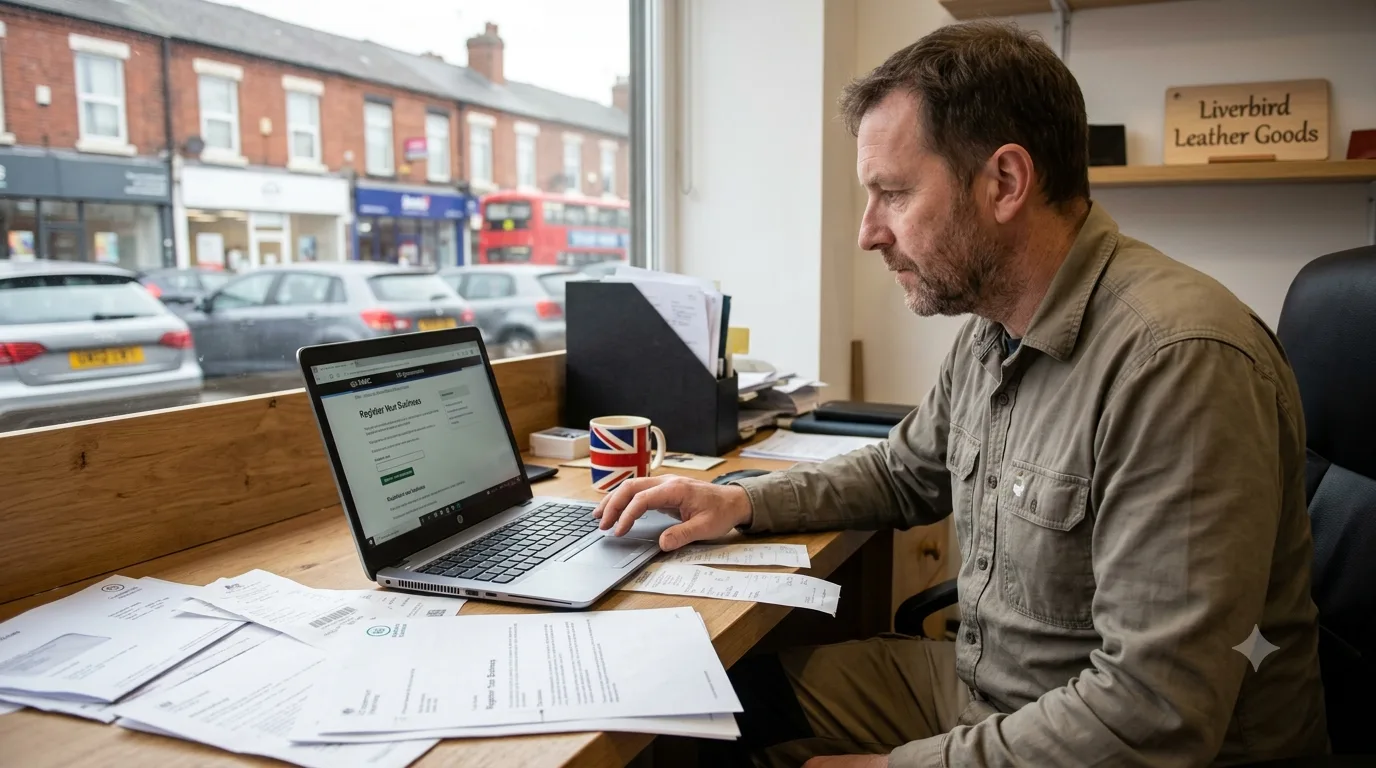
When Do You Need to Register Your Business with HMRC?

Starting a UK business does not always mean registering with HMRC immediately. Requirements depend on your business structure, income and whether you need to register for Corporation Tax, VAT or PAYE.
Sole traders usually need to register when gross trading income exceeds £1,000 in a tax year. Partnerships have Self Assessment requirements, while limited companies must register with Companies House before dealing with Corporation Tax.
You may also need to register if you employ staff, exceed the VAT threshold or use certain tax schemes. Recent changes include Making Tax Digital from April 2026, higher Companies House fees and identity verification for company registration.
Does Registering a Business Mean the Same as Incorporating It?
No. The terms are often used interchangeably, but they describe different processes.
- Registration can simply mean telling HMRC that you are self-employed, registering a partnership for Self Assessment, registering for VAT or establishing a PAYE scheme.
- Incorporation specifically creates a company as a separate legal entity through Companies House.
A sole trader can therefore register with HMRC without incorporating a company. A general partnership can also register with HMRC without becoming a company.
A limited company, by contrast, must be incorporated with Companies House before it begins trading as that company. GOV.UK confirms that a company is legally separate from its owners, whereas a sole trader remains personally responsible for business liabilities.
Understanding this difference is particularly important when choosing how a new business should operate.
When Does Each Type of Business Need to Register?
The main registration position can be summarised as follows:
| Business structure | Main registration | When registration is normally required |
| Sole trader | HMRC Self Assessment | When gross trading income exceeds £1,000 in a tax year |
| General partnership | HMRC Self Assessment | Partnership and individual partners must register |
| Limited company | Companies House and Corporation Tax requirements | Company must be incorporated before trading as a company |
| LLP | Companies House and HMRC | LLP must be incorporated and its tax affairs registered |
| Employer | HMRC PAYE | Before the first payday |
| VAT-liable business | HMRC VAT | Once the VAT registration rules are triggered |
These requirements can overlap. A limited company, for example, may simultaneously need Corporation Tax, PAYE and VAT registrations.
When Do Sole Traders Need to Register With HMRC?
A sole trader does not necessarily have to register before making their first sale.
The key figure is £1,000 of gross trading income in a tax year, calculated before deducting expenses.
If your total gross trading income from one or more trades exceeds £1,000, you will generally need to register for Self Assessment.
The £1,000 exemption is formally known as the trading allowance. HMRC states that individuals with gross trading income of £1,000 or less will often not need to tell HMRC about that income, although exceptions apply. Records should still be kept.
There is a fuller explanation of how the £1,000 self-employed income rules work, including the difference between the allowance and deducting actual business expenses.
What Is the Sole Trader Registration Deadline in 2026?
The deadline is 5 October following the end of the relevant tax year.
For example:
- If you became liable to register during the 2025/26 tax year, which ended on 5 April 2026, you normally need to tell HMRC by 5 October 2026.
- If you start trading during the 2026/27 tax year, the corresponding registration deadline will normally be 5 October 2027.
HMRC confirms that someone who needs to complete a return for 2025/26 and has not previously registered must tell HMRC by 5 October 2026.
After registering, you receive a Unique Taxpayer Reference and can manage your Self Assessment obligations.
Can You Register Even If You Earn Less Than £1,000?
Yes.
The trading allowance does not prevent voluntary registration, and there are situations where registering despite earning £1,000 or less can be useful or necessary.
For example, you may need to complete Self Assessment because you:
- Want to claim relief for a trading loss
- Want to make voluntary Class 2 National Insurance contributions
- Need your self-employment income considered for Tax-Free Childcare
- Want to support a Maternity Allowance claim
- Need to demonstrate that you are self-employed
- Are working under a scheme such as the Construction Industry Scheme.
HMRC specifically identifies several situations in which someone with income within the trading allowance may still need or choose to submit a return.
Keeping accurate income and expense records is therefore worthwhile from the first day of trading even if you initially expect to stay below £1,000.
How Has Class 2 National Insurance Changed for Sole Traders?
New business owners should be particularly careful with older guidance about Class 2 National Insurance.
Most self-employed people no longer make compulsory Class 2 payments in the way they previously did.
For the 2026/27 tax year, if your self-employed profits are £7,105 or more, Class 2 contributions are treated as having been paid, protecting your National Insurance record without an actual Class 2 payment.
If your profits are below £7,105, you do not normally have to pay Class 2, although you may choose to pay voluntary contributions where doing so helps protect entitlement to certain benefits or the State Pension.
Class 4 National Insurance remains separately payable when profits exceed the applicable threshold.
This means older advice suggesting that every sole trader registering with HMRC will automatically start paying Class 2 contributions is no longer accurate.
When Does a Limited Company Need to Register?
A limited company follows a different process because incorporation and tax registration are separate concepts.
Before trading as a limited company, the company must first be registered with Companies House.
When using the standard online Companies House registration service, the company will usually also be set up for Corporation Tax at the same time unless it is dormant.
If the company becomes active and has not already been set up correctly for Corporation Tax, HMRC must generally be told within three months of the start of its Corporation Tax accounting period.
Business activity can include:
- Buying and selling goods
- Providing services
- Advertising commercially
- Earning interest
- Receiving other business income.
Simply incorporating a company does not automatically mean it has started trading. A company can remain dormant before beginning commercial activity.
How Much Does It Cost to Register a Limited Company in 2026?
The standard Companies House incorporation fee increased substantially on 1 February 2026.
Current fees include:
| Companies House service | 2026 fee |
| Company incorporation online | £100 |
| Company incorporation through software | £100 |
| Company incorporation by paper | £124 |
| Same-day incorporation | £156 |
| Digital confirmation statement | £50 |
The £100 digital incorporation fee replaced the considerably lower fees that appeared in older startup guidance.
HMRC registration itself does not carry the same incorporation charge.
What Information Is Needed to Form a Limited Company?
Setting up a company involves more information than registering as a sole trader.
You will normally need to decide or provide:
- The company name
- Director details
- Shareholders or guarantorsSshare structure where relevant
- Registered office address
- Registered email address
- A Standard Industrial Classification code
- Details of people with significant control
- Memorandum and articles of association
- Companies House identity verification information where required.
A SIC code identifies the nature of the company’s business. Companies House requires businesses to choose from its condensed SIC list.
A person with significant control, or PSC, is usually someone who has significant ownership or control over the company. Common examples include someone with more than 25% of the shares or voting rights. PSC information must be supplied to Companies House.
Identity Verification Is Now Important
Identity verification became a legal Companies House requirement from 18 November 2025.
When registering a new company, directors are now asked to provide the Companies House personal code linked to their verified identity. PSCs also have identity verification responsibilities.
Business owners using older incorporation checklists should therefore update their preparation before submitting an application.
What Address Can a Limited Company Use?
Every company needs an appropriate registered office address.
It must be:
- A physical UK address
- Located in the same UK jurisdiction in which the company is registered
- Somewhere where company post can reasonably reach someone acting for the business
- Suitable for recording delivery of official documents.
A Royal Mail PO Box can no longer be used as the company’s registered office address.
Privacy also matters.
If you use your home address as the registered office, that address becomes publicly available through the Companies House register. The same issue can arise if a director uses a home address as their public service address.
A director’s usual residential address is provided separately to Companies House and is generally not displayed publicly.
A company may also have a separate trading or correspondence address, but this does not remove the requirement for an appropriate registered office.
What About General Partnerships and LLPs?
Partnership structures should not all be treated as the same.
General Partnerships
A general partnership does not usually register with Companies House.
One person must become the nominated partner and register the partnership with HMRC for Self Assessment.
The other partners must also register separately and submit their own Self Assessment returns.
The nominated partner is responsible for managing the partnership’s return and keeping the necessary records.
HMRC says the partnership should normally be registered by 5 October in its second tax year.
Each individual partner pays tax on their share of the partnership’s profits rather than the partnership paying Income Tax itself.
Limited Liability Partnerships
A Limited Liability Partnership, or LLP, is different.
An LLP combines characteristics of a partnership with some protections and reporting responsibilities more commonly associated with companies.
It must be registered with Companies House, while its tax affairs also need to be dealt with through HMRC. Individual members generally have their own tax responsibilities.
Current Companies House LLP incorporation fees are:
| LLP filing method | 2026 fee |
| Software incorporation | £100 |
| Paper incorporation | £124 |
| Same-day incorporation | £156 |
These fees have replaced the lower LLP registration figures found in older guidance.
LLPs also have continuing Companies House obligations, including accounts and confirmation statements.
Sole Trader or Limited Company: Which Registration Route Applies?
The two structures differ considerably.
| Area | Sole trader | Limited company |
| Legal status | Owner and business are legally linked | Company is a separate legal entity |
| Liability | Generally unlimited personal liability | Liability normally limited |
| Initial registration | HMRC when Self Assessment rules require it | Companies House before trading |
| Registration fee | No HMRC Self Assessment registration fee | £100 standard online incorporation |
| Income tax | Paid personally on taxable profits | Directors may pay tax on salary/dividends |
| Corporation Tax | No | Company pays Corporation Tax |
| National Insurance | Self-employed NI rules | Depends on remuneration and payroll |
| Records | Business and tax records | More extensive company and accounting records |
| Public filing | Generally no public accounts | Accounts and company information are filed publicly |
| Employees | Can employ staff | Can employ staff |
| VAT | Register if VAT rules apply | Register if VAT rules apply |
The simplest structure is not automatically the best one.
Liability, expected profits, investment requirements, administrative workload and long-term plans all matter when choosing between the two.
What Do You Need Before Registering With HMRC?

Preparing the information in advance can prevent delays.
For a Sole Trader
You will typically need:
- Government gateway access
- National insurance number
- Personal details
- Business or trading name if used
- Business start date
- Description of the business
- Records of trading income.
For a Partnership
The nominated partner will usually need information including:
- Partnership name
- Date the partnership started
- Accounting date
- Business details
- Partner information
- Government gateway credentials.
Each individual partner must also deal with their own Self Assessment registration.
For a Limited Company
Preparation normally includes:
- Proposed company name
- Registered office
- Registered email
- Director information
- Shareholders or guarantors
- Psc information
- Sic code
- Share capital information where applicable
- Companies house personal codes for directors where required.
Getting these details right at the beginning can reduce rejected applications and later amendments.
Do Side Hustles and Online Sellers Need to Register?
Running a side business alongside employment does not exempt someone from tax registration rules.
The same £1,000 gross trading income test can apply whether the activity is a full-time business, weekend service or online shop.
Since 1 January 2024, digital platform reporting rules have also required certain platforms to collect information about sellers and report relevant details to HMRC.
This can affect people earning money through marketplaces and platforms used for:
- Online retail
- Handmade products
- Accommodation
- Freelance services
- Transport and delivery
- Other platform-based work.
HMRC confirms that platform operators may collect and report seller identity and income information each year.
However, being reported by a platform does not automatically mean you owe tax.
Someone selling unwanted personal possessions is not necessarily trading. Buying or producing goods specifically to resell for profit is much more likely to constitute trading.
Equally, platform reporting thresholds and the £1,000 trading allowance are different rules. A platform’s decision to report information does not replace your responsibility to decide whether income must be declared.
Does Making Tax Digital Change the Registration Rules?
Making Tax Digital for Income Tax is now particularly important for sole traders because the first mandatory phase began on 6 April 2026.
It currently applies where the individual:
- Is a sole trader or landlord
- Is registered for self assessment
- Receives qualifying self-employment or property income and
- Exceeds the relevant qualifying-income threshold.
The timetable is:
| Qualifying income shown for | Threshold | MTD starts |
| 2024/25 | More than £50,000 | 6 April 2026 |
| 2025/26 | More than £30,000 | 6 April 2027 |
| 2026/27 | More than £20,000 | 6 April 2028 |
Qualifying income broadly means gross self-employment and property income before expenses.
Businesses within MTD must use compatible software for digital records and quarterly updates.
As of September 2026, HMRC has also said it will begin signing up people who are required to use MTD for 2026/27 but have not already signed up.
The wider implications are covered in the explanation of how Making Tax Digital works for UK businesses.
Partnerships are expected to enter MTD for Income Tax in the future, but HMRC has not yet published the final timetable for them.
When Does a Business Need to Register for VAT?
VAT registration is separate from registering as a sole trader, company or partnership.
A business normally has to register if:
- Its VAT-taxable turnover for the previous 12 months exceeds £90,000 or
- It expects its VAT-taxable turnover to exceed £90,000 within the next 30 days.
If the rolling 12-month threshold has been exceeded, registration is generally required within 30 days after the end of the month in which it happened.
If the business expects to exceed £90,000 during a single coming 30-day period, it must register by the end of that period, with the effective registration date beginning when that expectation arose.
Businesses below the threshold can also register voluntarily. That may allow VAT to be reclaimed on eligible purchases, although it also brings VAT charging, record-keeping and filing obligations.
When Do You Need to Register for PAYE?
A business that starts employing staff may also need to register as an employer with HMRC.
Registration should normally happen before the first payday, and HMRC does not allow an employer to register more than two months before it begins paying people.
A limited company may also need PAYE where the company pays a director through payroll.
PAYE registration is only the beginning. Employers then need payroll software, employee records and Real Time Information reporting.
Businesses preparing to take on staff can see how PAYE registration supports startup compliance and what needs to be arranged before the first payroll run.
How Much Does Business Registration Cost?
The basic costs vary considerably according to structure.
| Registration | Typical government fee |
| Sole trader Self Assessment registration | Free |
| General partnership HMRC registration | Free |
| Limited company online incorporation | £100 |
| Limited company paper incorporation | £124 |
| LLP software incorporation | £100 |
| LLP paper incorporation | £124 |
| CIC online incorporation | £115 |
| VAT registration | No HMRC application fee |
| PAYE employer registration | No HMRC application fee |
Companies House fees were updated in February 2026, so older £12 or £50 company-incorporation figures should no longer be relied upon. Current Companies House guidance shows £100 for standard online incorporation and £115 for online CIC incorporation.
Professional formation agents, accountants, registered-office providers and software services may charge additional commercial fees.
What Happens If You Register With HMRC Late?
The consequences depend on which obligation was missed.
For Self Assessment, registering after 5 October does not automatically mean a £100 registration fine.
HMRC states that if someone registers after 5 October and also fails to pay all tax due by 31 January, a failure-to-notify penalty may apply. The amount depends on the unpaid tax and circumstances.
Separate penalties apply for filing a tax return late. An online Self Assessment return that is required for 2025/26 is normally due by 31 January 2027, with tax also due by that date.
Late VAT registration can result in VAT being backdated to the date registration should have taken effect, together with possible penalties and interest.
Limited companies can also face problems where Corporation Tax obligations are not dealt with correctly after becoming active.
If a deadline has already been missed, dealing with the registration and any outstanding return or payment promptly is generally better than allowing the position to continue unresolved.
Are There Other Business Structures to Consider?
Sole traders, general partnerships, limited companies and LLPs cover most businesses, but they are not the only possibilities.
Other structures include:
- Community Interest Companies: CICs are limited companies designed for businesses operating primarily for community benefit. They have additional regulatory requirements.
- Public Limited Companies: PLCs are incorporated companies subject to more extensive capital, governance and reporting requirements.
- Social enterprises: A social enterprise describes the purpose of a business rather than one specific legal form. It can operate through structures including a CIC, limited company, co-operative, partnership or sole trader.
- Overseas companies: An overseas company establishing a place of business in the UK may need to register its UK establishment with Companies House.
- Unincorporated associations: These can be suitable for certain non-profit groups, clubs and voluntary organisations.
The tax and registration position should therefore be checked against the actual legal structure rather than assuming every organisation follows limited-company rules.
Is There Any Benefit to Registering Before You Have To?

Registration should primarily be driven by legal and tax requirements, but formalising a business can also have practical benefits.
Depending on the structure and circumstances, it can help with:
- Keeping business finances properly documented
- Demonstrating trading history to lenders
- Preparing finance applications
- Applying for certain grants or support programmes
- Claiming allowable tax relief or losses
- Building clearer financial records
- Hiring staff
- Establishing commercial credibility
- Separating company assets and liabilities from personal finances where incorporation is appropriate.
Registration itself does not guarantee a bank account, loan or grant. Lenders and programme providers will carry out their own eligibility assessments.
However, keeping HMRC and Companies House records accurate makes it much easier to demonstrate that a business is operating legitimately and has its compliance affairs under control.
Conclusion
Knowing when to register a business with HMRC starts with identifying the legal structure and the tax obligations that come with it.
For sole traders, the £1,000 trading allowance is usually the main starting point, with registration generally required by 5 October following the relevant tax year once gross trading income exceeds that figure.
Limited companies must be incorporated through Companies House and ensure Corporation Tax obligations are dealt with once the company becomes active. Partnerships, LLPs, employers and VAT-liable businesses have additional registration rules.
In 2026, business owners also need to account for Making Tax Digital, updated Companies House fees and the new identity verification requirements.
Keeping records from the first day of trading and checking registration requirements as turnover, staffing and business structure change can prevent much more expensive compliance problems later.
FAQs
Do I need to register with HMRC before I start trading?
Not always. A sole trader can normally begin trading before registering, although they must register when the Self Assessment rules require it. A limited company must be incorporated before trading as that company.
Do I need to register if my business earns less than £1,000?
Often not if your total gross trading income is £1,000 or less and the trading allowance applies. However, registration may still be necessary or beneficial for reasons such as claiming losses, Tax-Free Childcare or voluntary National Insurance contributions.
Is the £1,000 limit based on profit or turnover?
It is based on gross trading income before expenses, not profit.
Can I run a side hustle without registering a company?
Yes. A side hustle does not have to operate as a limited company. Many people operate initially as sole traders, although Self Assessment registration may become necessary once the relevant income rules are triggered.
Does selling on eBay, Etsy or Vinted mean I must register with HMRC?
Not automatically. Selling personal belongings does not necessarily amount to trading. However, buying or making products for resale at a profit may constitute trading, and the £1,000 gross trading income rule can then become relevant.
Platforms may also report seller information to HMRC under digital platform reporting rules.
Do I need a business bank account before registering with HMRC?
A sole trader does not normally need a dedicated business bank account to register for Self Assessment. Limited companies should keep company and personal finances separate because the company is a separate legal entity.
How much does it cost to register a limited company in 2026?
Standard online incorporation through Companies House currently costs £100. Paper incorporation costs £124.
What happens if I miss the 5 October 2026 Self Assessment registration deadline?
Register as soon as possible. Missing 5 October does not automatically create the £100 late-filing penalty, but a failure-to-notify penalty may arise if tax remains unpaid by the payment deadline. Your tax return and payment obligations also continue to apply.
Do I need to register separately for VAT after registering my business?
Yes. VAT is a separate tax registration. Registration is generally compulsory when taxable turnover exceeds £90,000 over the previous 12 months or is expected to exceed £90,000 during the next 30 days.
Can I change from a sole trader to a limited company later?
Yes. Businesses frequently start as sole traders and incorporate later as their risk, profits, financing needs or ownership arrangements change. The new company must be registered separately and its tax affairs set up correctly.






3 Comments