
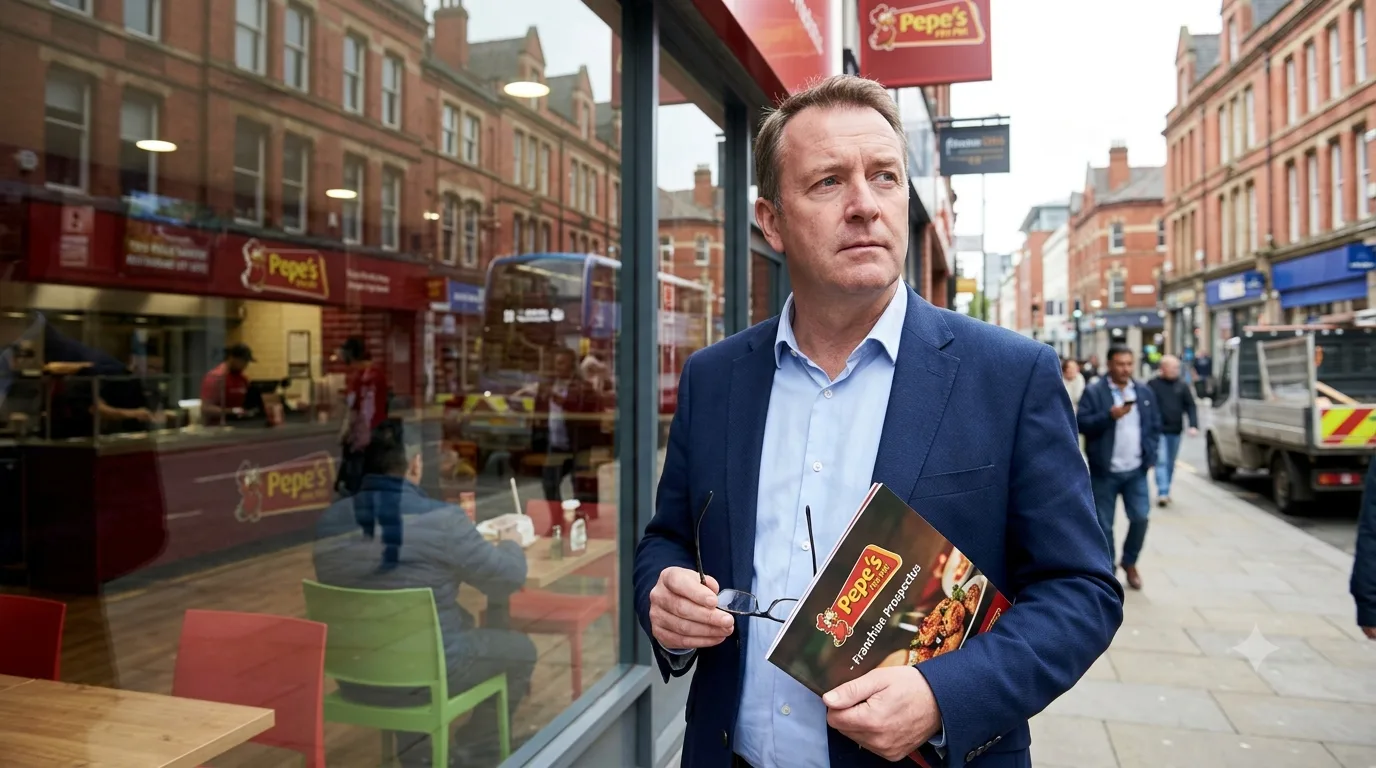
Pepe’s Piri Piri Franchise Cost: A Founder’s Breakdown

Opening a Pepe’s Piri Piri restaurant is no longer a relatively low-cost route into food franchising.
For a founder assessing the opportunity in 2026, the most important number is the minimum investment of £350,000 stated in Pepe’s current franchise prospectus.
That figure matters because older online estimates for the pepes franchise cost range from around £150,000 to £300,000, while Pepe’s own public franchising webpage still refers to a £300,000 minimum.
The more detailed 2026 Franchise Prospectus, however, gives the higher £350,000 figure and should therefore be the safer starting point for financial planning.
Pepe’s has grown to more than 250 UK locations, with restaurants also operating in the UAE.
Its scale gives prospective franchisees an established operating system, but the investment still needs to be assessed as a standalone business decision rather than simply a purchase of a recognised name.
The Pepe’s Franchise Cost Founders Should Use in 2026?
The current official figures give a clearer picture than many older franchise directories.
| Cost Area | Current Position |
| Minimum Total Investment | From £350,000 |
| Franchise Licence Fee | £15,000 + VAT |
| Restaurant Build And Fit-Out | From £300,000 + VAT for a minimum-size restaurant |
| Minimum Restaurant Size Referenced | Around 1,500 sq ft |
| Franchise Term | 15 years |
| Monthly Franchise Fee | From £1,979.92 + VAT in 2026 |
| National Marketing Fee | £518.54 + VAT per month in 2026 |
| Training | Included within the franchise licence fee, excluding personal travel, accommodation and food |
The £15,000 licence fee provides access to the franchise system, training, manuals, the Pepe’s app, training portal, marketing portal, central ordering system and operational compliance software.
This is significantly different from older figures of a £13,000 franchise fee and a 4% or 5% royalty. Those figures should not be presented as current Pepe’s terms.
Why Do Some Websites Still Say £250,000 Or £300,000?
The discrepancy is important.
Pepe’s public franchising FAQ currently says that the minimum investment required is £300,000, while its 2026 prospectus states £350,000.
Third-party franchise websites may quote still lower figures. Some have historically estimated:
- Shop Fit-Out At £80,000 To £150,000
- Kitchen Equipment And EPOS At £40,000 To £60,000
- Professional Fees At £5,000 To £10,000
- Working Capital At £20,000 To £30,000
Those estimates should not be treated as current Pepe’s figures. The official 2026 prospectus now says the restaurant build and fit-out alone starts at £300,000 + VAT for a minimum-size restaurant.
For a founder preparing a business plan, £350,000 should therefore be regarded as a minimum entry point rather than a guaranteed all-in budget.
Where Can The Final Investment Rise?
A minimum franchise investment rarely represents the maximum amount a founder could spend.
Property And Lease Costs
Rent deposits, advance rent, legal work, surveys and lease negotiations can differ substantially between locations.
A high-footfall London unit will usually have a very different property cost structure from premises in a smaller regional town.
Pepe’s allows franchisees to identify their own premises, but the location must be approved by the company. The brand also works with a national property-finding business for applicants who need assistance finding a suitable site.
Build And Fit-Out
This is likely to be one of the biggest capital commitments.
Pepe’s says the build and fit-out starts from £300,000 + VAT for a minimum-size restaurant of around 1,500 sq ft.
Larger premises, complicated extraction systems, substantial structural work or expensive local contractors could push the figure higher.
Franchisees can appoint their own shopfitter, provided the contractor meets the required health and safety, insurance and brand-standard requirements.
The 2026 prospectus also says a Pepe’s Brand Project Manager will oversee the project to ensure the restaurant meets the required specifications.
Professional Advice
Founders should separately budget for professional support such as:
- Franchise Agreement Review
- Commercial Lease Advice
- Property Surveys
- Accounting And Cash-Flow Forecasting
- Company And Tax Advice
- Insurance
- Licensing And Compliance
These costs are easy to underestimate because they do not necessarily appear as part of the headline franchise licence fee.
Working Capital
Opening the doors is only the start.
Cash may also be needed for wages, stock, utilities, rent, local marketing and unforeseen expenditure before the restaurant develops a stable trading pattern.
Rather than relying on a generic £20,000 or £30,000 working-capital figure found online, founders should build a store-specific cash-flow forecast covering several trading scenarios.
Pepe’s Ongoing Fees Have Changed
One of the most important corrections to older information concerns royalties.
Previous estimates often describe Pepe’s as charging a percentage of gross sales. The 2026 prospectus instead describes fixed monthly charges.
The monthly franchise fee starts from £1,979.92 + VAT in 2026, while the National Marketing Fee is £518.54 + VAT per month. The franchise fee is based on the number of chairs in the restaurant.
That gives a starting combined figure of approximately £2,498.46 + VAT per month, before rent, wages, food, utilities, delivery commissions, insurance and other operating expenditure.
Founders should request the latest fee schedule before making a final investment decision because franchise terms can change.
Can You Finance A Pepe’s Franchise?
Potential franchisees do not necessarily have to fund the entire project from cash.
Pepe’s says it has arranged franchise finance relationships with Lloyds, NatWest and HSBC. Its public franchising information also refers to asset finance for store equipment as a way of reducing the amount of setup capital required upfront.
That does not mean an applicant is automatically entitled to finance.
A lender may examine:
- Personal Capital
- Credit History
- Business Experience
- Proposed Location
- Business Plan
- Forecast Sales
- Cash-Flow Projections
- Security Or Guarantees
- Amount Being Invested Personally
Some franchise guidance online suggests banks may finance up to 70% of an investment. That should not be treated as a guaranteed Pepe’s lending ratio. The percentage available will depend on the lender, applicant and project.
Founders comparing the funding demands of different restaurant businesses may also want to examine the capital structures involved in a McDonald’s franchise or Domino’s franchise before deciding how much debt they are comfortable taking on.
What Training Does Pepe’s Provide?

A catering background is not required.
Pepe’s explicitly states that applicants do not need previous catering experience, although its current prospectus expects franchisees to be actively involved in their restaurant rather than treating it as a passive investment.
The training process is more structured than a simple pre-opening course.
Pepe’s public franchising FAQ describes an online Training Portal containing three levels and 29 courses. Training is also provided through its dedicated Head Office training facilities in London.
The 2026 prospectus adds further detail. After signing the franchise agreement, franchisees are enrolled into the Training Academy and expected to complete online learning before attending induction training at Head Office.
Applicants are also expected to pass the Pepe’s Franchisee Accreditation Exam and spend significant time working in an existing restaurant while their own site is being developed. An experienced Training Manager then provides in-person coaching during the first five days of trading.
Initial training is included within the franchise licence fee. Personal travel, accommodation and food expenses are not.
This Is A Hands-On Business, Not A Passive Investment
Capital alone is unlikely to make someone the right franchisee.
Pepe’s says it wants owners who are actively involved in operating their restaurants, including working within the business themselves.
A suitable applicant therefore needs more than access to £350,000.
Important capabilities include:
- Managing And Motivating Employees
- Understanding Cash Flow
- Maintaining Food And Hygiene Standards
- Controlling Labour And Stock Costs
- Monitoring Customer Service
- Working With Suppliers
- Following Franchise Systems
- Responding Quickly To Operational Problems
- Managing A High-Volume Restaurant Environment
Food experience may be teachable. Leadership, financial discipline and willingness to operate the business closely are harder to replace.
How The Pepe’s Application Process Typically Works?
The route from enquiry to opening can be considered as eight practical stages.
1. Make An Initial Enquiry
Prospective franchisees first contact Pepe’s and provide information about themselves, their preferred territory and their interest in the brand.
2. Assess The Franchise Opportunity
Review the franchise model, investment requirement, franchise term, ongoing payments and operational expectations before committing significant money.
3. Establish Funding Capacity
Determine how much personal capital is available and whether external finance may be required.
Funding discussions should happen early because the minimum investment now starts at £350,000.
4. Complete The Franchise Application
Applicants provide the information Pepe’s needs to assess whether they are commercially and financially suitable.
5. Complete Meetings And Approval
The franchise team can then assess the candidate’s experience, financial position and willingness to operate within the franchise system.
6. Secure An Approved Property
Franchisees can source premises themselves or use property support arranged through Pepe’s.
Either way, the site must be approved before proceeding.
7. Complete Training And Fit-Out
Training begins after the franchise agreement is signed while property and construction work progresses.
The restaurant then has to be completed in accordance with the brand’s specifications.
8. Open And Enter The Support Phase
Pepe’s provides opening support, including an experienced representative or Training Manager working alongside the franchisee during the opening period.
Do The Legal Due Diligence Before Signing
A franchise reduces some of the uncertainty involved in building a brand from nothing, but it does not remove legal or commercial risk.
The UK does not have a dedicated franchise-specific regulatory system. The British Franchise Association notes that franchise agreements are contractual documents and recommends that prospective franchisees obtain specialist legal advice before investing.
A solicitor familiar with franchising should examine areas including:
- Franchise Term
- Renewal Rights
- Termination Provisions
- Personal Guarantees
- Territory Protection
- Fees And Future Increases
- Supplier Restrictions
- Performance Obligations
- Resale Conditions
- Non-Compete Clauses
- Property And Lease Obligations
The franchise agreement is only one part of the due-diligence process.
A prospective owner should also speak to several existing franchisees rather than relying solely on sales material.
Useful questions include how long stores took to reach stable trading, whether staffing costs met expectations, how responsive operational support has been and whether actual setup costs remained within the original budget.
The British Franchise Association’s guidance on franchise legal reviews provides useful context for founders considering any franchise agreement.
How Does Pepe’s Compare With Other Food Franchise Options?
Pepe’s should not be assessed in isolation.
Different food franchises have different entry costs, operating models, franchise availability and owner requirements.
| Brand | Useful Comparison |
| Pepe’s Piri Piri | Current official minimum investment starts at £350,000 |
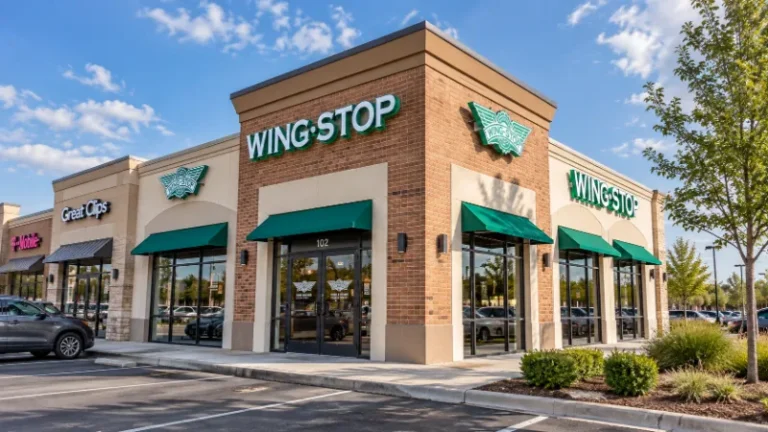
| Wingstop | Useful comparison for the chicken QSR market |
| McDonald’s | Larger established restaurant franchise model |
| Domino’s | Delivery-led food franchise model |
| Cake Box | Different food retail format and operating model |
| Nando’s | Does not currently offer UK and Ireland franchises |
Nando’s confirms that it does not offer franchises in the UK or Ireland, so it should not be presented as a direct UK franchise opportunity.
For businesses looking specifically at chicken concepts, the Wingstop franchise cost provides a useful comparison. Founders considering a different food-retail model can also compare the Cake Box franchise cost.
The important point is not simply which brand has the cheapest headline fee. Compare the total capital required, debt exposure, working capital, owner involvement, property commitment and ongoing charges.
How Profitable Is A Pepe’s Franchise?
There is no reliable official figure that allows a prospective franchisee to say every Pepe’s restaurant will generate a particular turnover, margin or payback period.
That distinction matters.
Older estimates suggesting £500,000 to £1 million turnover, 6% to 8% profit margins or an 18 to 36-month break-even period may be useful as hypothetical scenarios, but they should not be represented as guaranteed or official Pepe’s performance figures unless supported by current franchisee financial data.
A founder should instead build profitability from the store upwards.
Start with projected sales and deduct:
Food Costs + Labour + Rent + Business Rates + Utilities + Delivery Fees + Franchise Fees + Marketing Fees + Insurance + Maintenance + Finance Costs + Other Overheads
- Then stress-test the model.
- What happens if sales are 15% below forecast?
- What happens if wages rise?
- What happens if food costs increase?
- What happens if delivery platforms account for a larger percentage of orders than expected?
A business that only works under an optimistic sales forecast is carrying far more risk than one that remains viable under a conservative scenario.
Questions A Founder Should Answer Before Investing
Before paying deposits or signing legal documents, an applicant should be able to answer five questions clearly.
Can I comfortably fund more than the £350,000 minimum if the build becomes more expensive?
Projects can exceed initial budgets.
Can the business support debt repayments as well as operating costs?
Available finance does not automatically mean borrowing the maximum amount is sensible.
Am I prepared to operate the restaurant personally?
Pepe’s specifically seeks hands-on franchisees.
Does the proposed location work financially after rent and labour costs?
A prestigious address is not valuable if occupancy costs consume the store’s operating profit.
Have I independently checked the agreement and projections?
The franchisor’s information should be one input into the decision, not the entire due-diligence process.
Is A Pepe’s Piri Piri Franchise Worth The Cost?
The answer depends less on whether £350,000 sounds expensive and more on what that investment can realistically generate in a particular territory.
Pepe’s offers an established operating system, more than 250 UK locations, training, property assistance, launch support and access to recognised franchise lenders.
Against that, prospective owners face a substantial capital commitment, a fit-out starting from £300,000 + VAT, ongoing monthly franchise charges and the demands of running a labour-intensive restaurant business.
For a well-capitalised founder who wants an active role in a quick-service restaurant, the model may justify further investigation.
For someone looking for passive income, limited capital exposure or a business that can be operated remotely, it is unlikely to be the right fit.
The decision should ultimately be based on the latest franchise prospectus, independent legal advice, realistic store-level forecasts and conversations with existing franchisees rather than headline revenue or profit estimates found online.
FAQs
What Is The Minimum Pepe’s Franchise Cost In 2026?
The latest Pepe’s 2026 franchise prospectus states a minimum investment of £350,000.
Its public franchising webpage still says £300,000, so founders should use the newer £350,000 figure for initial planning and confirm the latest amount directly before applying.
How Much Is The Pepe’s Franchise Licence Fee?
The 2026 franchise licence fee is £15,000 + VAT. It includes a 15-year franchise licence, training and access to the main operational systems and portals.
Does Pepe’s Charge A Percentage Royalty?
The current 2026 prospectus describes a fixed monthly franchise fee rather than the older percentage royalty figures found online. The fee starts from £1,979.92 + VAT per month, with a separate £518.54 + VAT National Marketing Fee.
Can I Finance A Pepe’s Franchise?
Potentially. Pepe’s says it has franchise finance arrangements with Lloyds, NatWest and HSBC. Its public FAQ also refers to asset finance for store equipment. Approval and lending amounts remain subject to individual lender assessment.
Can I Find My Own Pepe’s Restaurant Premises?
Yes. Franchisees can identify their own premises, but Pepe’s must approve the property. The company also works with a national property-finding business where assistance is required.
Can I Use My Own Builder For The Restaurant Fit-Out?
Yes, subject to Pepe’s requirements. The contractor must have the relevant health and safety documentation and insurance and must build the restaurant according to Pepe’s specifications.
Do I Need Restaurant Or Catering Experience?
No. Pepe’s says previous catering experience is not required and provides training. However, its current franchise material makes clear that franchisees are expected to be actively involved in running their restaurant.



One Comment